
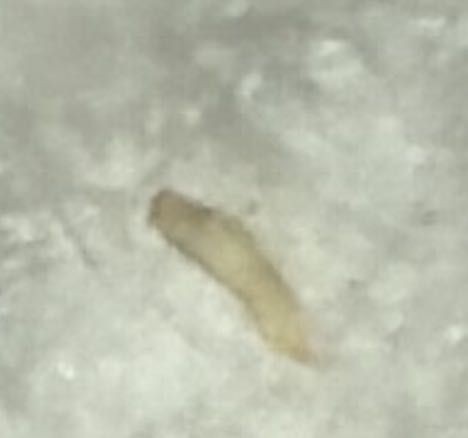
Case-bearing Clothes Moth Larva
Tinea pellionella
- Order & Family
- Order: Lepidoptera, Family: Tineidae
- Size
- Larvae are roughly 7mm to 10mm (about 0.25 to 0.4 inches) in length.
Natural Habitat
Typically found indoors in dark, quiet areas such as closets, under carpets, in air ducts, or baseboards where natural fibers (wool, silk, fur) or lint accumulate.
Diet & Feeding
Feeds on keratin-rich materials, including wool, silk, fur, feathers, leather, pet hair, and lint. They may also eat plant-based materials or stored grains if heavily soiled.
Behavior Patterns
The larva builds a flattened, portable, silken tube or 'case' around its body, which it drags along as it moves. It withdraws inside the case when disturbed. They avoid light and prefer high humidity.
Risks & Benefits
Risks: Major household pest that causes economic damage by eating irregular holes in expensive clothing, carpets, tapestries, and taxidermy. Benefits: In nature, they help decompose animal matter (like old feathers or fur) and recycle keratin.