
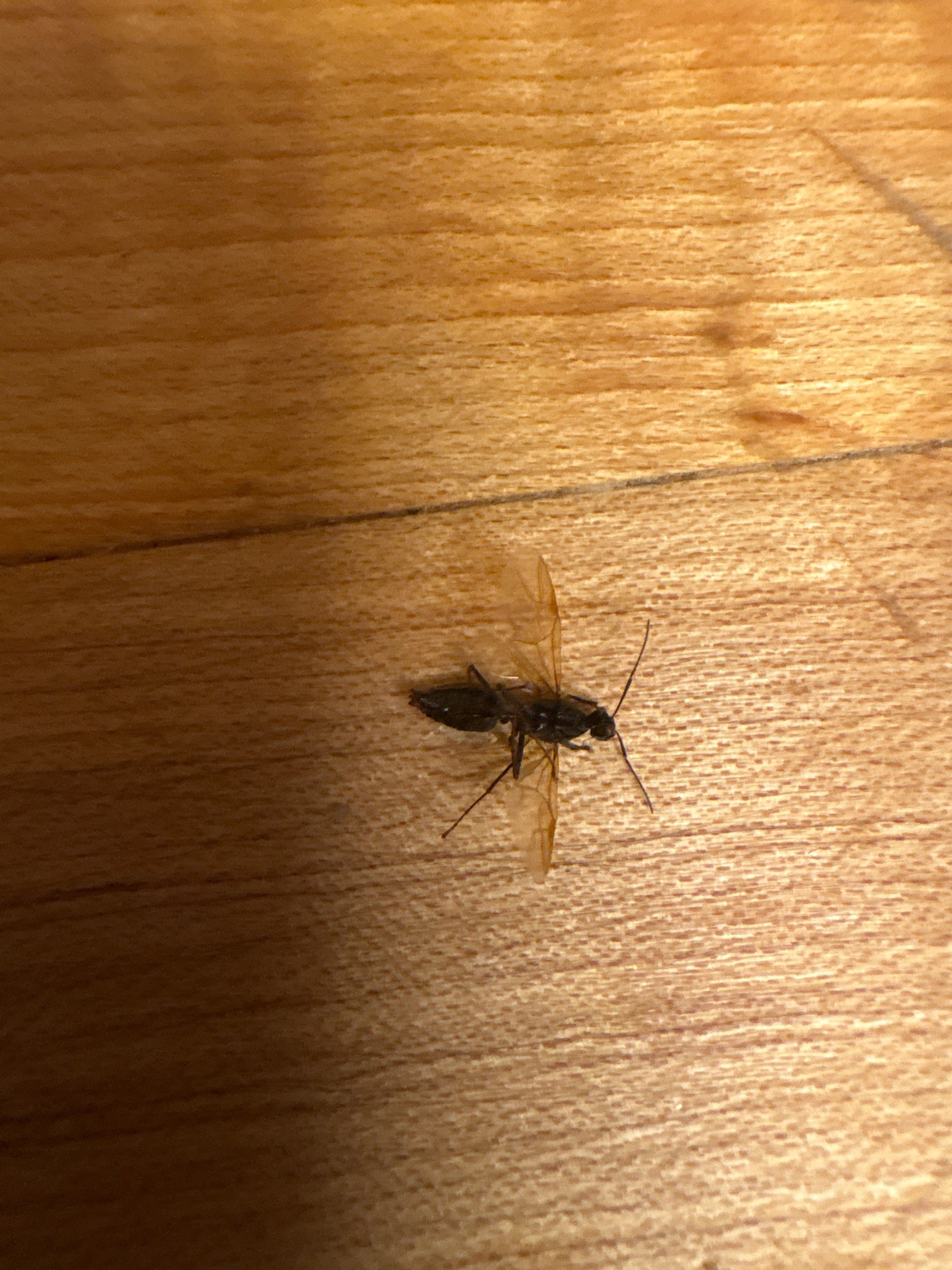
Community identification
Carpenter Ant (Winged Reproductive/Swarmer)
Camponotus pennsylvanicus
- Order & Family
- Hymenoptera: Formicidae
- Size
- 13mm to 17mm (approx. 0.5 to 0.7 inches) for winged queens
Natural Habitat
Nests are located in moist or decaying wood in forests, but can also be found in residential wooden structures such as wall voids, porch pillars, and windowsills.
Diet & Feeding
Omnivorous; they feed on honeydew from aphids, plant juices, and other insects. Inside homes, they seek sweets, fats, and meats.
Behavior Patterns
Winged reproductives (alates) emerge in spring/early summer for nuptial flights to start new colonies. Unlike termites, they do not eat wood but excavate it to create galleries for nesting.
Risks & Benefits
Potential risk for structural damage to homes if colonies are established in building timbers. Benefits ecosystems by recycling dead wood into the soil and serving as a food source for birds and mammals.