
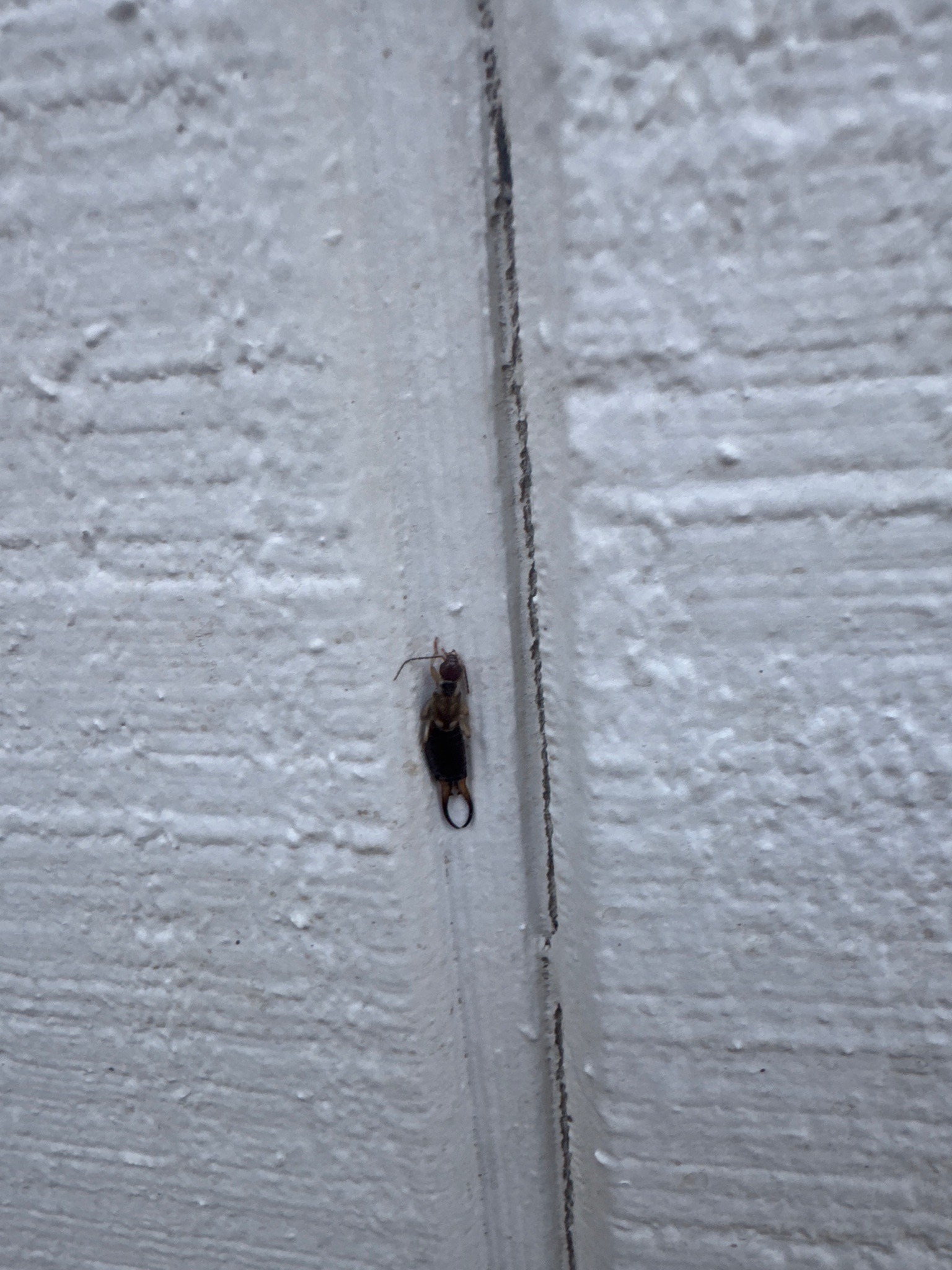
Community identification
European Earwig
Forficula auricularia
- Order & Family
- Dermaptera, Forficulidae
- Size
- 12 - 15 mm (0.5 - 0.6 inches) in length
Natural Habitat
Dark, moist areas such as under rocks, logs, mulch, and in garden debris; frequently enters homes through cracks and crevices.
Diet & Feeding
Omnivorous; feeds on a variety of organic matter including decaying plants, living flowers, vegetables, and small insects like aphids and mites.
Behavior Patterns
Nocturnal insects that seek shelter in tight crevices during the day; notable for the forcep-like cerci at their tail end used for defense and mating. They exhibit maternal care, with females tending to eggs and young nymphs.
Risks & Benefits
Harmless to humans as they are not venomous and do not spread disease, though they can give a small pinch. They can be garden pests by damaging foliage, but are also beneficial as they prey on other garden pests like aphids.