
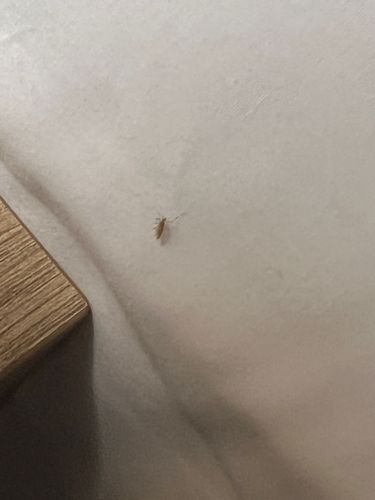
Booklouse / Psocid
Various species (e.g., Liposcelis spp., Trogium pulsatorium)
- Order & Family
- Order: Psocoptera, Family: Various (e.g., Liposcelididae, Psocidae)
- Size
- Typically 1-2 mm, though some species can be up to 10 mm.
Natural Habitat
Booklice prefer warm, humid environments, typically found indoors in areas with high moisture such as bathrooms, kitchens, basements, or near leaky pipes. They also infest books, papers, stored food products, and furniture.
Diet & Feeding
They feed primarily on microscopic mold, fungi, dead insect fragments, pollen, and other organic debris. In homes, they are attracted to starches found in books, flour, wallpaper paste, and glues.
Behavior Patterns
Psocids are mostly active at night or in dimly lit conditions. They are often found in dark, undisturbed areas. They are known for their rapid, jerky movements when disturbed. Many species are gregarious, living in colonies.
Risks & Benefits
Generally harmless to humans, they do not bite or transmit diseases. However, large infestations can contaminate food products and damage paper goods (books, documents) by feeding on mold growing on them. They can be an indicator of high humidity issues in a home.