
Community identification
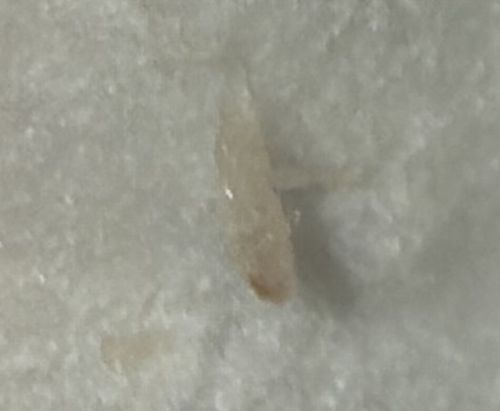
Booklouse (or Psocid)
Liposcelis spp. (Commonly Liposcelis bostrychophila)
- Order & Family
- Order: Psocodea (formerly Psocoptera), Family: Liposcelididae
- Size
- Very small, typically 1 mm to 2 mm in length.
Natural Habitat
Found in warm, damp indoor environments including bookshelves, pantries, closets, and bathrooms; often hides in cracks, crevices, stored dry foods, and paper products.
Diet & Feeding
Feeds on microscopic molds, fungi, starch, glue (like bookbinding glue), and stored food products such as flour or grains.
Behavior Patterns
They are wingless, soft-bodied insects that run quickly rather than fly. They do not bite but reproduce rapidly via parthenogenesis in warm, humid conditions.
Risks & Benefits
Generally harmless to humans and pets as they do not bite or transmit disease. However, they can contaminate stored food products and, in large numbers, indicate a moisture or mold problem in the home.