
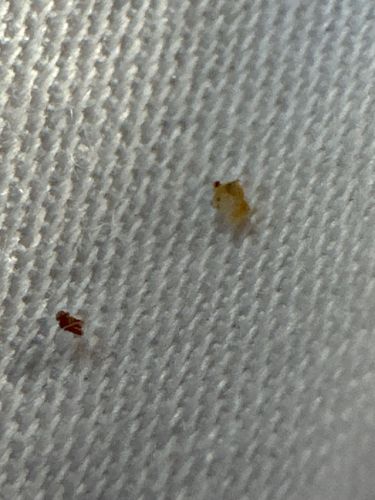
Booklouse (or Psocid)
Though many species exist, a common indoor species is Liposcelis bostrychophila.
- Order & Family
- Order: Psocoptera, Family: Liposcelididae (for some common indoor species like Liposcelis bostrychophila)
- Size
- Typically 1-2 mm in length.
Natural Habitat
Damp, humid environments such as bathrooms, basements, kitchens, libraries, attics, and around window sills. They are often found in stored foods, books, and on moldy surfaces.
Diet & Feeding
Fungi, mold, starch, glue (especially in bookbindings), decaying organic matter, and various dried food products.
Behavior Patterns
Booklice are often found in damp, dark, and undisturbed areas. They are very mobile and can move quickly. They complete their life cycle in about 20-30 days under ideal conditions (warm and humid). They are often mistaken for bed bugs but do not feed on blood or bite. They can infest books, paper, cereals, and other starchy materials.
Risks & Benefits
Risks: Can be a nuisance pest in homes and contaminate stored food products. Though they don't bite or transmit diseases, their presence can indicate high humidity and potential mold growth. They can also damage books and wallpaper. Benefits: In natural environments, they contribute to the decomposition of decaying organic matter.