
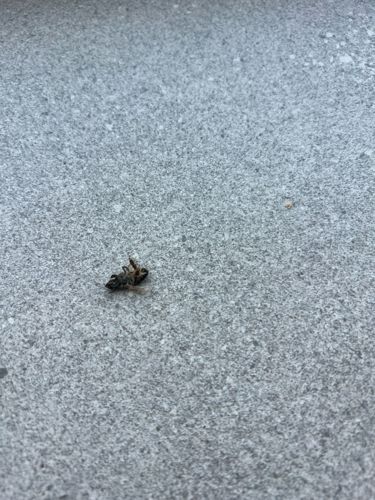
Bee (likely Honey Bee or Bumblebee)
Apis mellifera (for Honey Bee), Bombus spp. (for Bumblebee - hard to tell precisely from the image)
- Order & Family
- Order: Hymenoptera, Family: Apidae
- Size
- Common honey bees and bumblebees range from approximately 10 mm to 20 mm in length, depending on the species and caste (worker, drone, queen).
Natural Habitat
Bees are found in a wide variety of habitats globally where flowering plants are present. This includes forests, grasslands, gardens, agricultural areas, and urban environments. They build nests in trees, underground, or in man-made structures.
Diet & Feeding
Bees primarily feed on nectar, which provides carbohydrates (energy), and pollen, which provides protein and other nutrients. They also produce honey from nectar for storage and consumption.
Behavior Patterns
Bees are social insects (though some are solitary). They are known for their intricate nest building (hives), effective communication within the colony, and meticulous food storage. They are active during daylight hours, foraging for nectar and pollen. If threatened, they may sting to defend their colony. In the image, the bee appears to be on its back, which might indicate it is deceased or in distress.
Risks & Benefits
Benefits: Bees are crucial pollinators for a vast number of plants, including many food crops, contributing significantly to biodiversity and food security. They also produce honey, beeswax, propolis, and royal jelly, which have various human uses. Risks: Their stings can be painful and, for individuals with allergies, can cause severe anaphylactic reactions that can be life-threatening.