
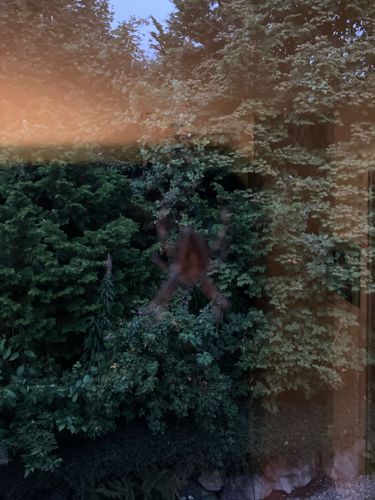
Orb Weaver Spider (likely European Garden Spider or Cross Orb-weaver)
Araneidae (family level); specific species like Argiope aurantia or Araneus diadematus are common examples of orb weavers.
- Order & Family
- Order: Araneae, Family: Araneidae
- Size
- Body length typically ranges from 5 mm to 20 mm for females, with males usually being smaller. Leg span can be considerably larger depending on the species, often up to several inches.
Natural Habitat
Orb weavers are widespread and can be found in gardens, forests, fields, and urban areas. They often build their webs between plants, trees, shrubs, or structures like fences and houses, typically in areas where flying insects are abundant.
Diet & Feeding
Strictly carnivorous, feeding primarily on a variety of insects caught in their webs. This includes flies, mosquitoes, moths, beetles, and other small flying or crawling invertebrates.
Behavior Patterns
Orb weavers are known for spinning large, intricate, and often beautiful spiral-patterned webs to catch prey. Most orb weavers are nocturnal, dismantling their old web at dawn and spinning a new one each night. They often sit in the center of their web or hide nearby, sensing vibrations to detect prey. During the day, they may hide under leaves or in crevices.
Risks & Benefits
Risks: Orb weaver spiders are generally harmless to humans. While they can bite if provoked, their venom is not considered medically significant and typically results in mild symptoms such as localized pain, redness, and swelling, similar to a bee sting. Benefits: They are highly beneficial in pest control, consuming large quantities of mosquitoes, flies, and other common nuisance insects, helping to maintain ecological balance.