
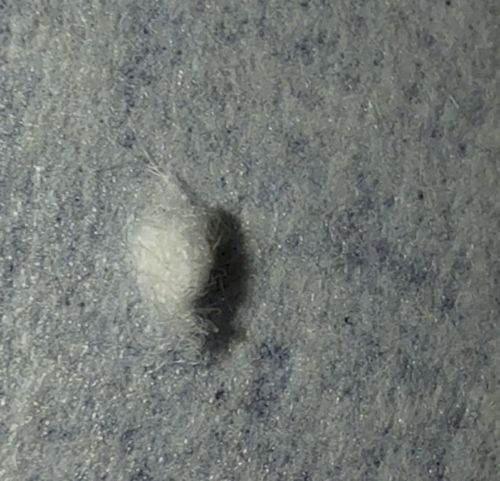
Case-bearing Clothes Moth Larva
Tinea pellionella
- Order & Family
- Lepidoptera (Order) / Tineidae (Family)
- Size
- Larvae are generally 5 to 10 millimeters long; the case itself is usually about that same length.
Natural Habitat
Typically found indoors in dark, undisturbed areas such as closets, drawers, under carpets, or beneath furniture where natural fibers accumulate.
Diet & Feeding
The larvae feed on keratin-based animal fibers such as wool, fur, silk, feathers, felt, and sometimes hair or pet dander found in dust.
Behavior Patterns
The larva constructs a protective, portable case out of silk and fibers from the material it is eating. It drags this case around as it moves and feeds. When threatened, the larva pulls completely inside the case. They eventually attach the case to a surface to pupate.
Risks & Benefits
Risks: They are considered household pests because the larvae chew holes in clothing, carpets, tapestries, and upholstered furniture made of natural materials. They do not bite or sting humans and pose no direct health threat, but can cause significant economic damage to textiles.