
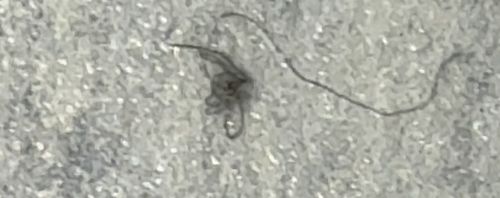
Community identification
Masked Hunter Nymph (Camouflaged)
Reduvius personatus
- Order & Family
- Order: Hemiptera, Family: Reduviidae (Assassin Bugs)
- Size
- Nymphs vary from 4mm to 12mm depending on developmental stage; adults reach 17-22mm.
Natural Habitat
Often found in dusty indoor environments like attics, basements, and under beds, as well as outdoor sheltered areas like woodpiles.
Diet & Feeding
They are predaceous and feed on small arthropods, including bed bugs, earwigs, silverfish, and woodlice.
Behavior Patterns
Nymphs exhibit a unique behavior of covering themselves with dust, lint, sand, and debris (as seen in the image) for camouflage. This 'dust bunny' disguise helps them ambush prey and avoid predators.
Risks & Benefits
Benefits: They are beneficial pest controllers that eat household pests like bed bugs. Risks: While not aggressive towards humans, they have a painful bite if handled or threatened, similar to a bee sting.