
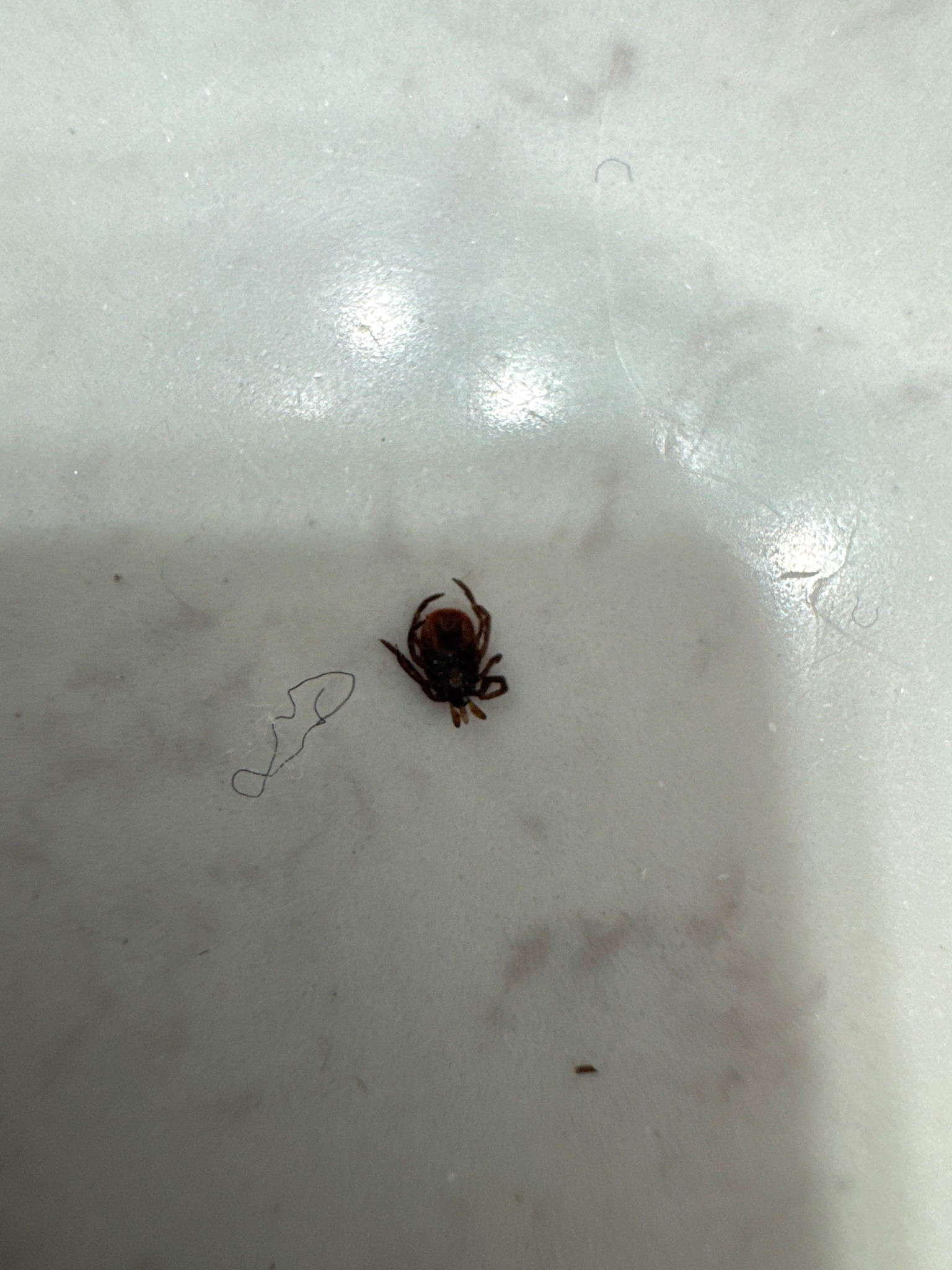
Community identification
American Dog Tick
Dermacentor variabilis
- Order & Family
- Ixodida/Ixodidae
- Size
- 3mm to 5mm (unfed), growing up to 15mm when fully engorged.
Natural Habitat
Grassy areas, wooded paths, and low-lying vegetation where hosts are likely to pass.
Diet & Feeding
Obligate hematophage; feeds on the blood of mammals, including dogs, cattle, and humans.
Behavior Patterns
Uses a behavior called 'questing' where it clings to vegetation with hind legs and reaches out with front legs to grab passing hosts. It has a three-host life cycle (larva, nymph, adult).
Risks & Benefits
Significant health risk as a primary vector for Rocky Mountain Spotted Fever and Tularemia. It can also cause tick paralysis in humans and pets. It provides no significant ecosystem benefits to humans.