
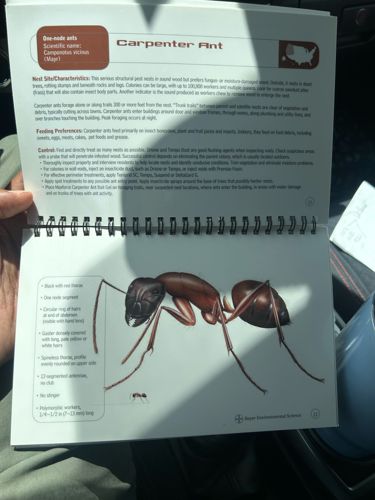
Carpenter Ant
Camponotus vicinus (Mayr)
- Order & Family
- Hymenoptera, Formicidae
- Size
- 1/4-1/2 inch (7-13 mm) long for polymorphic workers.
Natural Habitat
This serious structural pest nests in sound wood but prefers fungus or moisture-damaged wood. Outdoors, it nests in dead logs, rotting stumps, and beneath rocks and logs.
Diet & Feeding
Carpenter ants feed primarily on insect honeydew, plant and fruit juices, and insects. Indoors, they feed on food items including sweets, eggs, meats, cakes, pet foods, and grease.
Behavior Patterns
Carpenter ants forage alone or along trails 200 or more feet from the nest. "Trunk trails" along pavement and sidewalks may be used. Carpenter ants enter buildings around door and window frames, through eaves, along plumbing, and utility lines, and over branches touching the building. Peak foraging occurs at night. Colonies can be large, with up to 100,000 workers and multiple queens.
Risks & Benefits
Carpenter ants are a structural pest that can cause damage to wood structures as they excavate galleries for their nests. Another indicator of their presence is the sound produced as workers chew to enlarge the nest. They are a nuisance pest.