
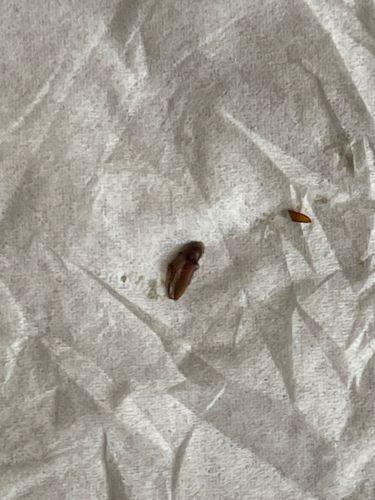
Scarab beetle larva (Grub)
Various species within Scarabaeidae (larva stage)
- Order & Family
- Order: Coleoptera, Family: Scarabaeidae
- Size
- Larvae (grubs) can range from a few millimeters to several centimeters depending on the species. The one pictured appears to be in the range of 1-3 cm.
Natural Habitat
Typically found in soil, compost piles, rotting wood, and other areas rich in decaying organic matter. Can be found in gardens, forests, and sometimes residential areas if there's suitable organic material.
Diet & Feeding
Mainly decaying organic matter, such as rotting wood, compost, and sometimes plant roots (in some species).
Behavior Patterns
Larvae develop in rotting wood, can be found in decaying logs or stumps. Adults are typically nocturnal and attracted to lights. They are scavengers and detritivores, playing a role in decomposition.
Risks & Benefits
Generally beneficial as decomposers, helping to recycle nutrients in the ecosystem. Some species, particularly certain scarab grubs, can be pests in gardens or agricultural settings by feeding on plant roots, causing damage to lawns or crops. The larva shown does not appear to be a common agricultural pest species based on its appearance.