
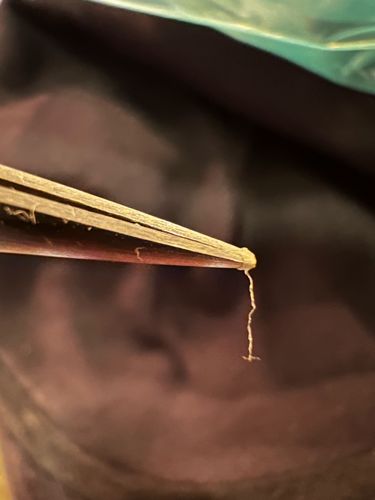
Case-bearing Clothes Moth (larva)
Tinea pellionella
- Order & Family
- Lepidoptera, Tineidae
- Size
- Larvae are typically 10-14 mm (0.4-0.55 inches) long; adults have a wingspan of 9-16 mm.
Natural Habitat
Indoors, especially in dark, undisturbed places like closets, attics, and storage areas. They feed on natural fibers.
Diet & Feeding
Larvae feed on natural animal fibers found in clothing (wool, silk, fur), carpets, upholstery, felt, and even sometimes dust and lint containing these materials. They can also feed on stored food products.
Behavior Patterns
The larva constructs a silken case, incorporating bits of the material it is feeding on, which it carries with it. It protrudes its head and legs from the case to feed and move. This case is crucial for identification. Adults are poor fliers and prefer to run or hop; they are not attracted to light as much as other moth species.
Risks & Benefits
Risks: Significant pest of textiles, causing damage to clothing, carpets, and other items made from natural fibers. Benefits: No known direct benefits to humans or the ecosystem; generally considered a pest.