
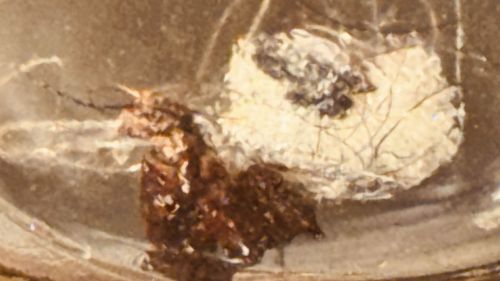
Case-bearing Clothes Moth
Tinea pellionella
- Order & Family
- Lepidoptera, Tineidae
- Size
- Larvae up to 10 mm, adults 6-8 mm wingspan
Natural Habitat
Indoors, typically in dark, undisturbed areas such as closets, attics, and storage containers, feeding on natural fibers.
Diet & Feeding
Larvae feed on keratins found in natural fibers like wool, fur, silk, feathers, felt, and sometimes stored foods or dust.
Behavior Patterns
Larvae construct a portable silken case incorporating fibers from their food source, which they carry with them as they feed and grow. Adults are poor fliers and prefer to run or hop. They are typically nocturnal and attracted to light. The entire life cycle, from egg to adult, can take 2-3 months under optimal conditions.
Risks & Benefits
Potential risks include significant damage to textiles, clothing, carpets, and stored natural fiber items. They are considered a pest species, and there are no known benefits to humans or the ecosystem.