
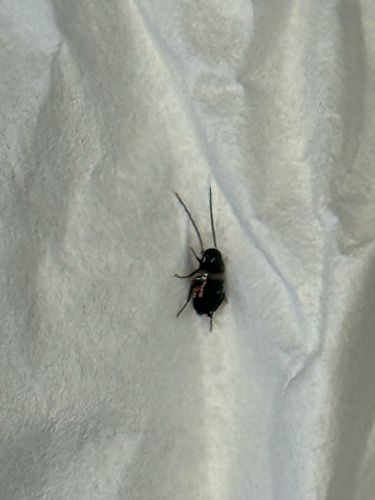
Cockroach (likely an oriental cockroach or similar dark species)
Blatta orientalis (if an Oriental cockroach, but without clearer details or regional context, a specific scientific name is difficult to confirm)
- Order & Family
- Order: Blattodea, Family: Blattidae (or various other families within Blattodea, depending on the exact species)
- Size
- Depending on the species, adult cockroaches can range from 0.5 to 2 inches (1.2 to 5 cm) in length. Based on the image, this individual appears to be on the smaller to medium size for a cockroach.
Natural Habitat
This appears to be a cockroach, likely a species that prefers dark, damp, and cool places. Common habitats include basements, crawl spaces, drains, sewers, under sinks, and in wall voids. They can often be found outdoors under leaf litter, rocks, or in garden areas, especially the Oriental cockroach.
Diet & Feeding
Cockroaches are omnivores and scavengers. They will eat almost anything organic, including food scraps, decaying matter, starches, sweets, grease, hair, dead skin, glue, soap, and even other insects.
Behavior Patterns
Cockroaches are primarily nocturnal and gregarious insects, meaning they are most active at night and tend to live in groups. They are known for their rapid movement and ability to scurry into tight spaces. They lay their eggs in a capsule called an ootheca, which is often carried by the female for a period before being deposited in a secluded location. Their life cycle involves incomplete metamorphosis (egg, nymph, adult).
Risks & Benefits
Risks: Cockroaches can pose significant public health risks. They are mechanical vectors for various pathogens (bacteria, viruses, fungi, protozoa) because they crawl over decaying matter and then onto food preparation surfaces. They can trigger allergies and asthma in sensitive individuals due to their shed skins, feces, and body parts. They can also contaminate food and surfaces. Benefits: In nature, cockroaches play a role as decomposers, helping to break down organic matter. However, their presence in human dwellings is generally considered a pest issue.