
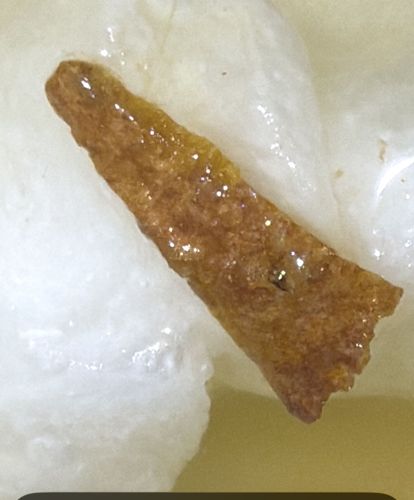
Community identification
Shark Tooth (Fossilized)
Various species (e.g., Squalicorax, Cretaceous shark species)
- Order & Family
- Lamniformes (Order), various families depending on species
- Size
- Varies by species; typically 0.5 to 1.5 inches for common finds, though some are much larger
Natural Habitat
Ancient marine environments (now found in sedimentary rock, beaches, and creek beds)
Diet & Feeding
Carnivorous (ancient sharks fed on fish, marine reptiles, and other sea life)
Behavior Patterns
N/A (This is a fossilized remain, not a living insect or bug)
Risks & Benefits
No risks (inert rock). Benefit: Valuable to paleontology and a popular collectible item for hobbyists.