
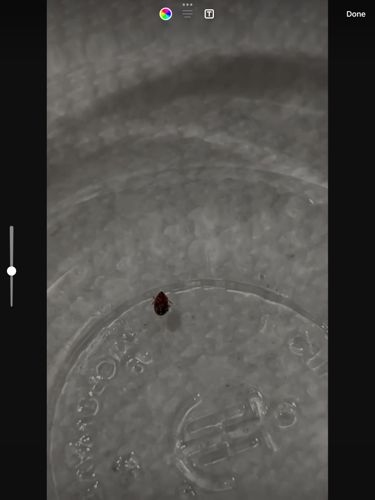
Spider Mite (likely a species of Tetranychidae, possibly Two-spotted Spider Mite)
Tetranychus urticae (for Two-spotted Spider Mite, a common species, though exact species is hard to determine from image)
- Order & Family
- Order: Trombidiformes, Family: Tetranychidae
- Size
- Typically 0.2 to 0.5 mm in length. They are very small, often requiring a magnifying glass to see clearly.
Natural Habitat
Spider mites are found worldwide, primarily on plants in gardens, agricultural fields, greenhouses, and even houseplants. They prefer the undersides of leaves where they are somewhat protected.
Diet & Feeding
Spider mites are plant feeders, piercing plant cells with their stylets and sucking out the contents. They feed on a wide variety of plants including fruits, vegetables, ornamentals, and field crops. Their feeding causes stippling (tiny dots) on leaves, yellowing, and eventually defoliation.
Behavior Patterns
Spider mites are known for spinning fine silk webs, especially when populations are high. They are very prolific, reproducing quickly, and can develop resistance to pesticides. They thrive in hot, dry conditions and can spread easily via wind or by hitchhiking on plants or animals.
Risks & Benefits
Risks: Spider mites are significant agricultural and horticultural pests. Their feeding can cause severe damage to crops, leading to reduced yields and even plant death, resulting in economic losses. They are not harmful to humans or animals. Benefits: In natural ecosystems, they serve as a food source for some predatory insects and mites, helping to maintain ecological balance, though their pest status often outweighs this benefit.