
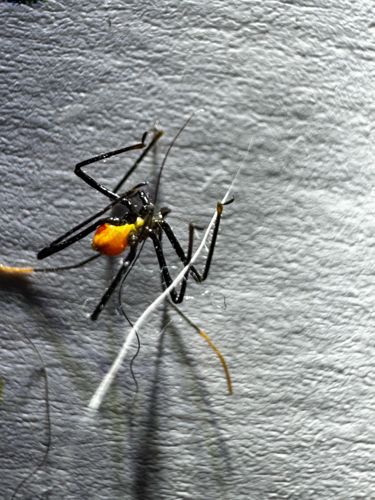
Milkweed Assassin Bug Nymph
Zelus longipes (nymph)
- Order & Family
- Hemiptera, Reduviidae
- Size
- Nymphs typically range from a few millimeters up to about 1-2 cm as they mature through instars. Adults can reach 1.5 - 2 cm.
Natural Habitat
Gardens, fields, and other vegetated areas where prey insects are abundant. Often found on plants such as milkweed, goldenrod, and various shrubs.
Diet & Feeding
Predatory. Both nymphs and adults feed on a wide variety of other insects, including aphids, leafhoppers, caterpillars, and other soft-bodied arthropods. They use their strong, piercing-sucking proboscis to inject enzymes into their prey, liquefying their insides before sucking them out.
Behavior Patterns
Assassin bugs are sit-and-wait predators. Nymphs, like the one pictured, are often less mobile than adults, waiting on plants for prey to come within striking distance. They are generalist predators and do not build webs or nests.
Risks & Benefits
Potential risks include a painful bite if handled, though they are not aggressive towards humans and typically only bite in self-defense. They are not venomous to humans and do not transmit diseases. Benefits include being a natural biological control agent, helping to reduce populations of various pest insects in gardens and agricultural settings.