
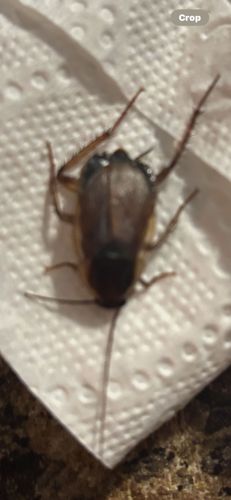
German Cockroach
Blattella germanica
- Order & Family
- Blattodea, Ectobiidae (formerly Blattellidae)
- Size
- 1.1 to 1.6 cm (0.43 to 0.63 inches) in length.
Natural Habitat
Prefers warm, humid environments, especially kitchens and bathrooms. Commonly found in homes, restaurants, food processing plants, and other commercial settings, usually near food and water sources.
Diet & Feeding
Omnivorous scavengers; eat almost anything, including food scraps, crumbs, pet food, grease, soap, glue, and even other cockroaches when resources are scarce.
Behavior Patterns
Nocturnal; hides in cracks and crevices during the day. Known for rapid, erratic movements. Can climb rough surfaces and sometimes walls. Females carry egg cases (oothecae) for a period before dropping them. German cockroaches reproduce quickly.
Risks & Benefits
Potential risks: Known vectors for pathogens (bacteria, viruses, fungi, parasitic worms), can trigger allergies and asthma in sensitive individuals due to their saliva, droppings, and shed skins, and can contaminate food and surfaces. They are considered significant pests. Benefits: While generally considered pests in human environments, in natural ecosystems, they play a role as decomposers.