
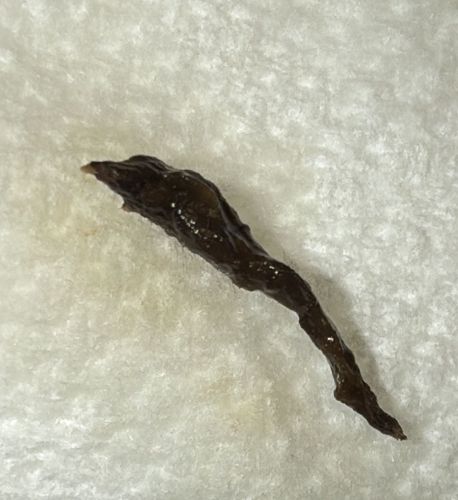
Community identification
Lesser House Fly Larva (Maggot)
Fannia canicularis
- Order & Family
- Order: Diptera; Family: Fanniidae
- Size
- 6–12 mm (0.24–0.47 inches) in length
Natural Habitat
Found globally in proximity to humans; typically breeds in decaying organic matter, animal manure, garbage, and damp environments.
Diet & Feeding
Larvae feed on liquid or semi-liquid decaying organic materials, fecal matter, and microbial film found in stagnant, protein-rich waste.
Behavior Patterns
The larvae are distinct for being flattened and having numerous lateral, feather-like processes that allow them to float or stay submerged in liquid waste. They undergo 3 larval stages before pupating.
Risks & Benefits
Risks include the mechanical transmission of pathogens (bacteria, viruses) to food. In rare cases, they can cause accidental myiasis in humans or livestock. Benefits are limited but include the decomposition of waste materials.