
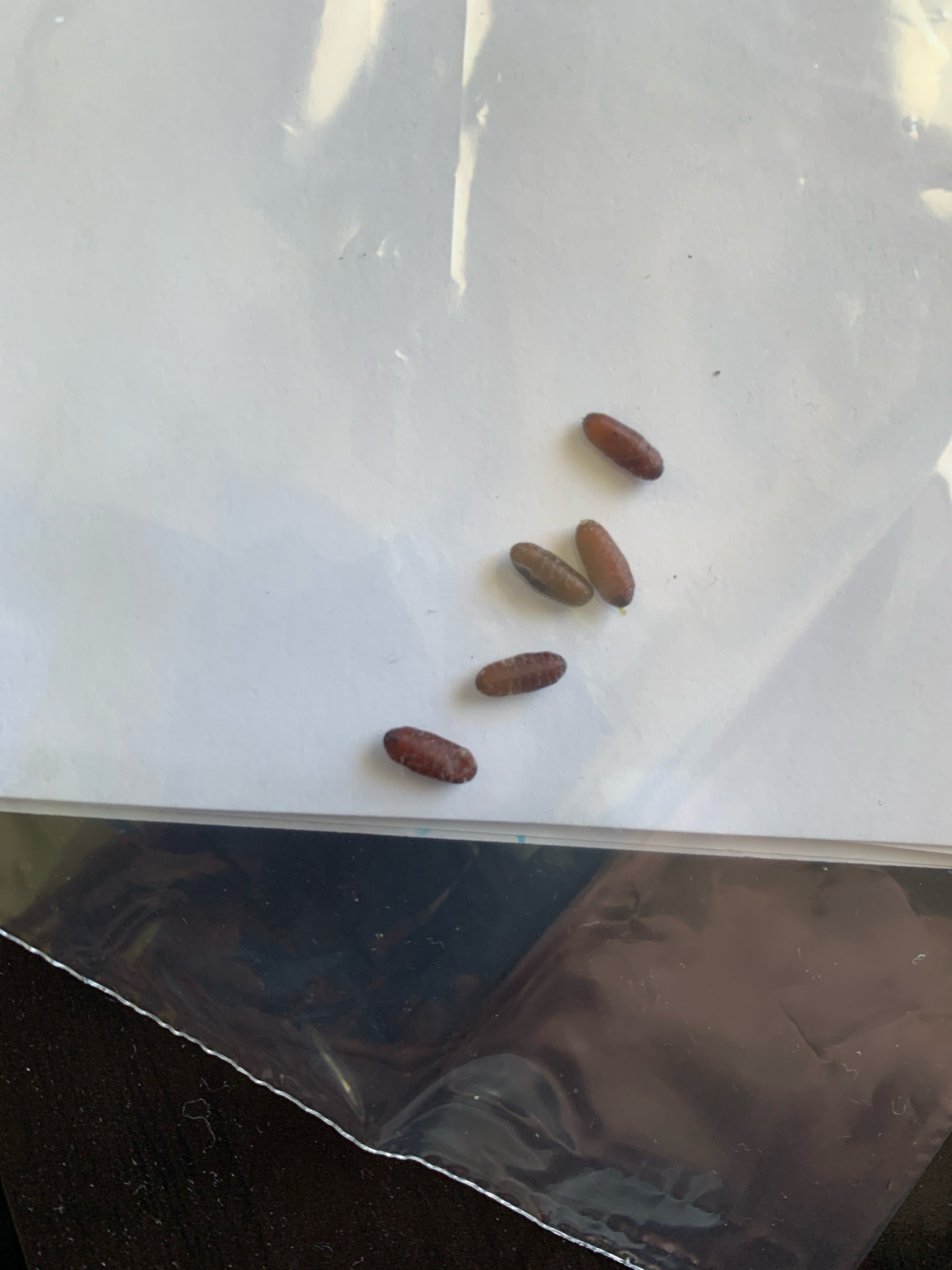
Community identification
Fly Pupae
Musca domestica (likely House Fly)
- Order & Family
- Order: Diptera, Family: Muscidae
- Size
- 5 to 8 mm in length
Natural Habitat
Commonly found near decaying organic matter, trash, animal waste, or indoor environments where food sources are available.
Diet & Feeding
In this pupal stage, the insect does not eat. As larvae (maggots), they consume decomposing organic material, and as adults, they feed on a variety of liquids and semi-solids.
Behavior Patterns
This is the non-feeding, immobile life stage between the larva (maggot) and the adult fly. The outer shell hardens and turns reddish-brown before the adult emerges after approximately 3 to 6 days.
Risks & Benefits
Adult flies can spread diseases such as typhoid, cholera, and salmonellosis by contaminating food. They are indicators of sanitation issues. In the ecosystem, they serve as decomposers and a food source for other animals.