
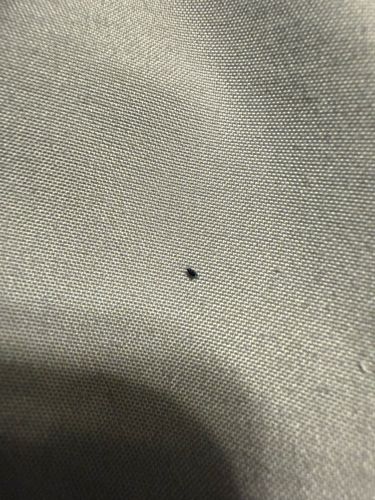
Flea (likely a cat flea or dog flea based on common indoor sightings)
Ctenocephalides felis (cat flea), Ctenocephalides canis (dog flea)
- Order & Family
- Order: Siphonaptera, Family: Pulicidae
- Size
- 1.5 to 3.3 millimeters (0.06 to 0.13 inches) in length
Natural Habitat
Fleas thrive in warm, humid environments and are typically found on the bodies of their animal hosts (mammals and birds). Indoors, they can infest carpets, bedding, furniture, and cracks in floors, especially in areas where pets rest.
Diet & Feeding
Adult fleas are obligate hematophagous parasites, meaning they feed exclusively on the blood of their hosts. Larvae feed on organic debris, including adult flea feces ('flea dirt'), skin flakes, and food particles.
Behavior Patterns
Fleas are wingless insects known for their exceptional jumping ability, allowing them to easily transfer between hosts. They have a complete metamorphosis (egg, larva, pupa, adult). Adults spend most of their lives on a host, feeding and reproducing. Eggs are laid on the host but often fall off into the environment, developing in upholstery, carpets, or pet bedding. Pupae are resilient and can remain dormant for extended periods until a suitable host is detected by vibrations, warmth, or exhaled carbon dioxide.
Risks & Benefits
Risks: Fleas are considered pests due to their bites causing itching, irritation, and allergic reactions (flea allergy dermatitis) in both pets and humans. They can also transmit diseases and parasites, such as tapeworms (Dipylidium caninum) and sometimes Bartonellosis ('cat scratch disease'). In rare cases, they can transmit more serious diseases like typhus or plague, although this is less common with domestic flea species. Benefits: From a human perspective, fleas offer little to no benefit, but in ecological terms, they are a food source for some predatory insects and small animals, and their parasitic nature contributes to natural population control in some wildlife.