
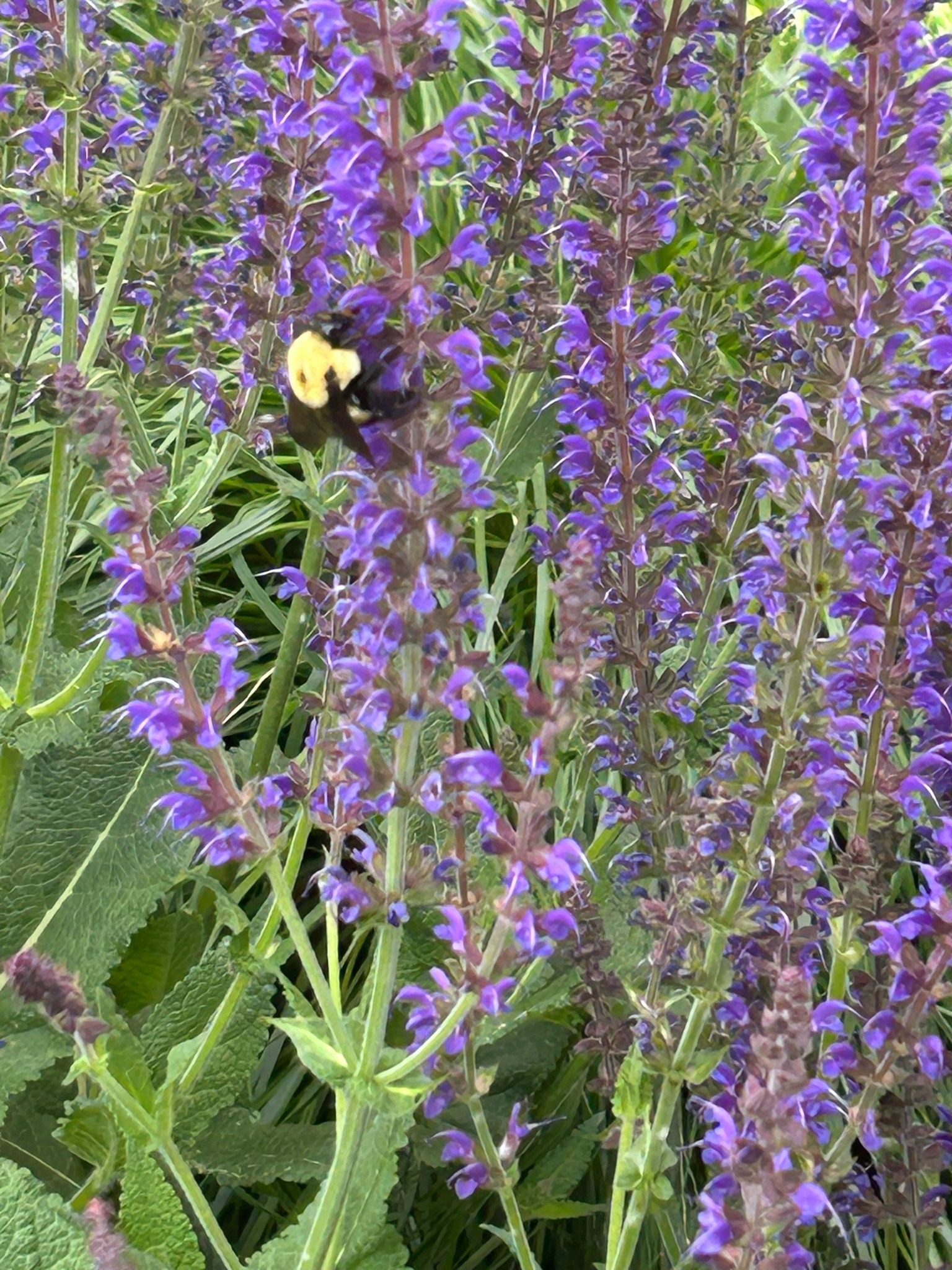
Community identification
Common Eastern Bumble Bee
Bombus impatiens
- Order & Family
- Order: Hymenoptera, Family: Apidae
- Size
- Workers: 8–16 mm, Queens: 17–21 mm, Males: 12–17 mm
Natural Habitat
Found in temperate regions, including gardens, parks, meadows, and agricultural areas across North America.
Diet & Feeding
Herbivorous. Feeds on nectar for energy and collects pollen for protein to feed the larvae.
Behavior Patterns
A social insect that lives in colonies underground. Known for 'buzz pollination' where they vibrate their bodies to release pollen from flowers. They are active from early spring until late autumn.
Risks & Benefits
Benefits: Essential pollinator for many wildflowers and crops (like tomatoes and blueberries). Risks: They can sting if the nest is threatened or if handled roughly, though they are generally non-aggressive while foraging.