
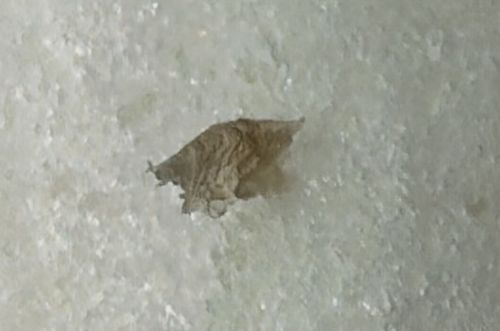
Household Casebearer (often confused with Plaster Bagworm)
Phereoeca uterella
- Order & Family
- Lepidoptera (Order), Tineidae (Family)
- Size
- Larval case is typically 8-13 mm long
Natural Habitat
Typically found indoors in humid climates, often seen on stucco walls, under spiderwebs, in garages, or inside closets. They thrive in warm, high-humidity environments.
Diet & Feeding
Detritivores; larvae feed on old spider webs (contains silk and insect remains), pet hair, woolen fibers, dead insects, and general house dust.
Behavior Patterns
The larva constructs a protective, flattened, almond-shaped case made of silk and covered with sand, dust, or soil particles (camouflaging it). It drags this case around as it moves. The larva can extend its head and legs from either end of the case to feed or move. When threatened, it retreats completely inside.
Risks & Benefits
Generally considered a minor household pest rather than a danger. They do not bite or sting humans. While they can feed on woolen fabrics (like clothes moths), they are usually more interested in spider webs and dust. They are mostly a nuisance due to their appearance on walls.