
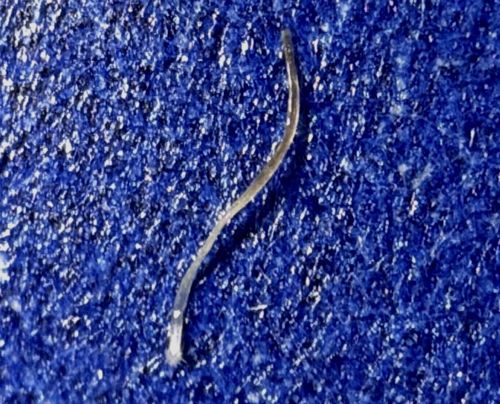
Fungus Gnat Larva
Sciaridae family (commonly Bradysia spp.)
- Order & Family
- Order: Diptera; Family: Sciaridae
- Size
- Typically 1/8 to 1/4 inch (3 to 6 mm) in length.
Natural Habitat
Damp soil rich in organic matter, overwatered houseplants, greenhouses, and decaying vegetation.
Diet & Feeding
Primarily feeds on soil fungi, algae, and decaying organic matter. Large populations may feed on plant root hairs and soft root tissue.
Behavior Patterns
These larvae live in the top few inches of moist soil. They have a distinctive translucent, legless body with a shiny black head capsule. They eventually pupate in the soil to emerge as small black flying gnats.
Risks & Benefits
Risks: Generally harmless to humans but considered a pest; larvae can damage plant roots (especially seedlings) and spread plant diseases like Pythium; adults are a common household nuisance. Benefits: They aid in the decomposition of organic matter in natural ecosystems.