
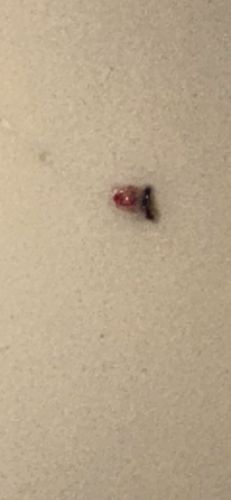
Bed Bug (remains)
Cimex lectularius
- Order & Family
- Order: Hemiptera, Family: Cimicidae
- Size
- Typically 4-5 mm (adults) before feeding, but the remains are too fragmented to assess size accurately.
Natural Habitat
Bed bugs typically inhabit areas close to their human hosts, such as mattresses, bed frames, headboards, cracks in walls, furniture, and luggage. They prefer dark, secluded spaces.
Diet & Feeding
Bed bugs are obligate hematophagous insects, meaning they feed exclusively on the blood of warm-blooded animals, primarily humans.
Behavior Patterns
Given the appearance of the remnants, it is impossible to determine specific behavior patterns. Typically, these insects are nocturnal, active feeders, and highly skilled at hiding in cracks and crevices during the day.
Risks & Benefits
Risks: Bed bugs are considered a public health pest. While they are not known to transmit diseases, their bites can cause itchy welts, skin irritation, allergic reactions, and secondary skin infections from scratching. They can also cause significant psychological distress due to sleep disturbance and anxiety. Benefits: None known for humans; they are generally considered pests.