
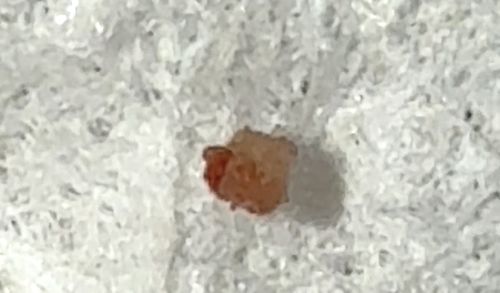
Community identification
Bed Bug (Nymph or early stage)
Cimex lectularius
- Order & Family
- Hemiptera: Cimicidae
- Size
- 1 mm to 5 mm (The specimen in the photo appears to be a nymph, which are translucent or light reddish-brown and very small, about the size of a poppy seed).
Natural Habitat
Found almost exclusively in human dwellings, typically in cracks and crevices near sleeping areas, such as mattresses, box springs, headboards, and baseboards.
Diet & Feeding
Hematophagous (feeds exclusively on the blood of warm-blooded animals, primarily humans).
Behavior Patterns
Nocturnal and cryptic; they hide during the day in tight spaces and emerge at night to feed. They are attracted to warmth and carbon dioxide emitted by sleeping hosts.
Risks & Benefits
Risks: Bed bugs cause itchy bites, allergic reactions, anxiety, and significant psychological distress. While they are not known to transmit disease effectively, their presence is a major nuisance and difficult to eradicate. Benefits: None known in a domestic context.