
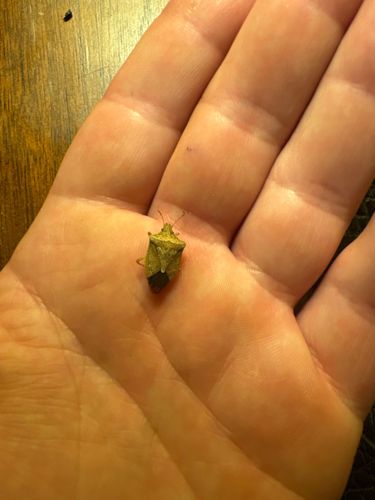
Stink Bug (likely Brown Marmorated Stink Bug)
Halyomorpha halys (assuming it's the Brown Marmorated Stink Bug due to its prevalence and appearance)
- Order & Family
- Order: Hemiptera; Family: Pentatomidae
- Size
- Typically around 1.2 to 1.7 cm (0.5 to 0.7 inches) in length for adults.
Natural Habitat
Originally from Asia, the Brown Marmorated Stink Bug has become an invasive species in North America and Europe. They are commonly found in agricultural fields, orchards, gardens, and wooded areas during warmer months. In colder months, they aggregate on the sunny sides of buildings and eventually enter homes and other sheltered locations.
Diet & Feeding
Polyphagous, meaning they feed on a wide variety of plants. They primarily feed on fruits, vegetables, and field crops by piercing the plant tissue with their mouthparts and sucking out plant juices. This feeding can cause significant damage to crops.
Behavior Patterns
Stink bugs are known for releasing a foul-smelling odor when disturbed or crushed, which is a defense mechanism against predators. They are relatively slow-moving and can fly. In cooler weather, especially as winter approaches, they often seek shelter indoors in homes and other structures, becoming a nuisance.
Risks & Benefits
Risks: Considered an agricultural pest due to the significant damage they can cause to a wide range of crops, including fruits (apples, peaches, berries), vegetables (tomatoes, corn, peppers), and ornamental plants. Their feeding can lead to necrotic spots, cat-facing, and reduced yield or marketability of produce. They are also a nuisance pest when they invade homes in large numbers, as they can produce an unpleasant odor if squashed or disturbed. Benefits: While some stink bug species are predatory and can be beneficial in controlling other insect pests, the common pest species like the Brown Marmorated Stink Bug have very limited to no recognized benefits in the ecosystems they invade; rather, they are primarily detrimental.