
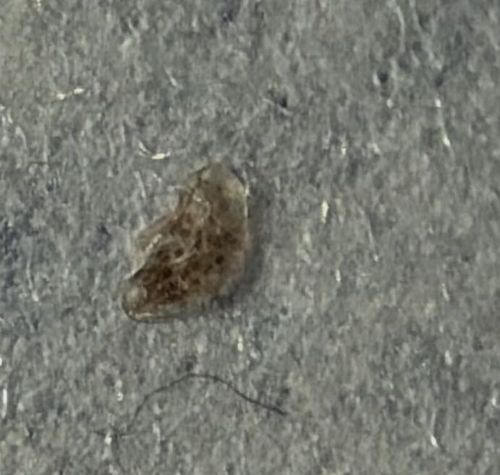
Case-bearing Clothes Moth (Larval case)
Tinea pellionella
- Order & Family
- Order: Lepidoptera, Family: Tineidae
- Size
- The case is usually 5-10 mm long; the adult moth has a wingspan of about 9-16 mm.
Natural Habitat
Found indoors, typically in dark, quiet areas like closets, drawers, and under furniture or rugs. They are particularly drawn to natural fibers such as wool, silk, fur, felt, and feathers.
Diet & Feeding
The larvae feed on keratin-rich materials, including wool, hair, fur, silk, felt, feathers, and occasionally stored grains. They can damage carpets, clothing, and upholstery.
Behavior Patterns
Unlike other clothes moths, the larva of this species spins a portable, flattened case made of silk and debris (like fibers or sand) which it carries around for protection. It never leaves this case, feeding from one end and dragging the case along. When ready to pupate, it finds a secluded crevice.
Risks & Benefits
Risks: Major household pest distinct for the damage larvae cause to expensive natural fabrics, rugs, and clothes. Benefits: In nature, they play a minor role as detritivores, breaking down animal hair and feathers, but in homes, they are solely destructive.