
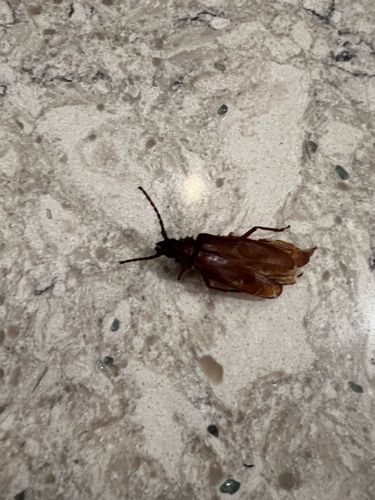
Longhorn Beetle (likely a species of Cerambycidae, possibly a Prionid or related subfamily)
Cerambycidae (familial identification due to lack of specific distinguishing features for species in the image)
- Order & Family
- Order: Coleoptera, Family: Cerambycidae
- Size
- Species within Cerambycidae vary greatly in size, ranging from a few millimeters to over 15 centimeters. The specimen in the image appears to be in the range of 2-5 cm.
Natural Habitat
Longhorn beetles are found in a wide variety of wooded habitats, including forests, woodlands, orchards, and even urban areas with trees. Larvae develop within wood, so their habitat is essentially inside trees or dead wood. Adults are found on or near trees, stumps, logs, or flying around.
Diet & Feeding
Larvae of longhorn beetles are xylophagous, meaning they feed on wood. They bore into the heartwood or sapwood of trees, dead or alive, deciduous or coniferous, depending on the species. Adult longhorn beetles may feed on pollen, nectar, sap, or sometimes not at all.
Behavior Patterns
Longhorn beetles typically have a long larval stage, often spending months or even years feeding on wood before pupating. Adults are often active flyers and are attracted to light, which is why they may be found indoors, especially at night or around well-lit areas. Some species are attracted to freshly cut wood or stressed/dying trees.
Risks & Benefits
Potential risks include damage to lumber, furniture, or structural timbers by the wood-boring larvae, especially if the wood was not properly treated or seasoned. Some species can be significant pests in forestry or agriculture by damaging living trees. Benefits include their role as decomposers, helping to break down dead wood and recycle nutrients in ecosystems. Some species are important pollinators as adults.