
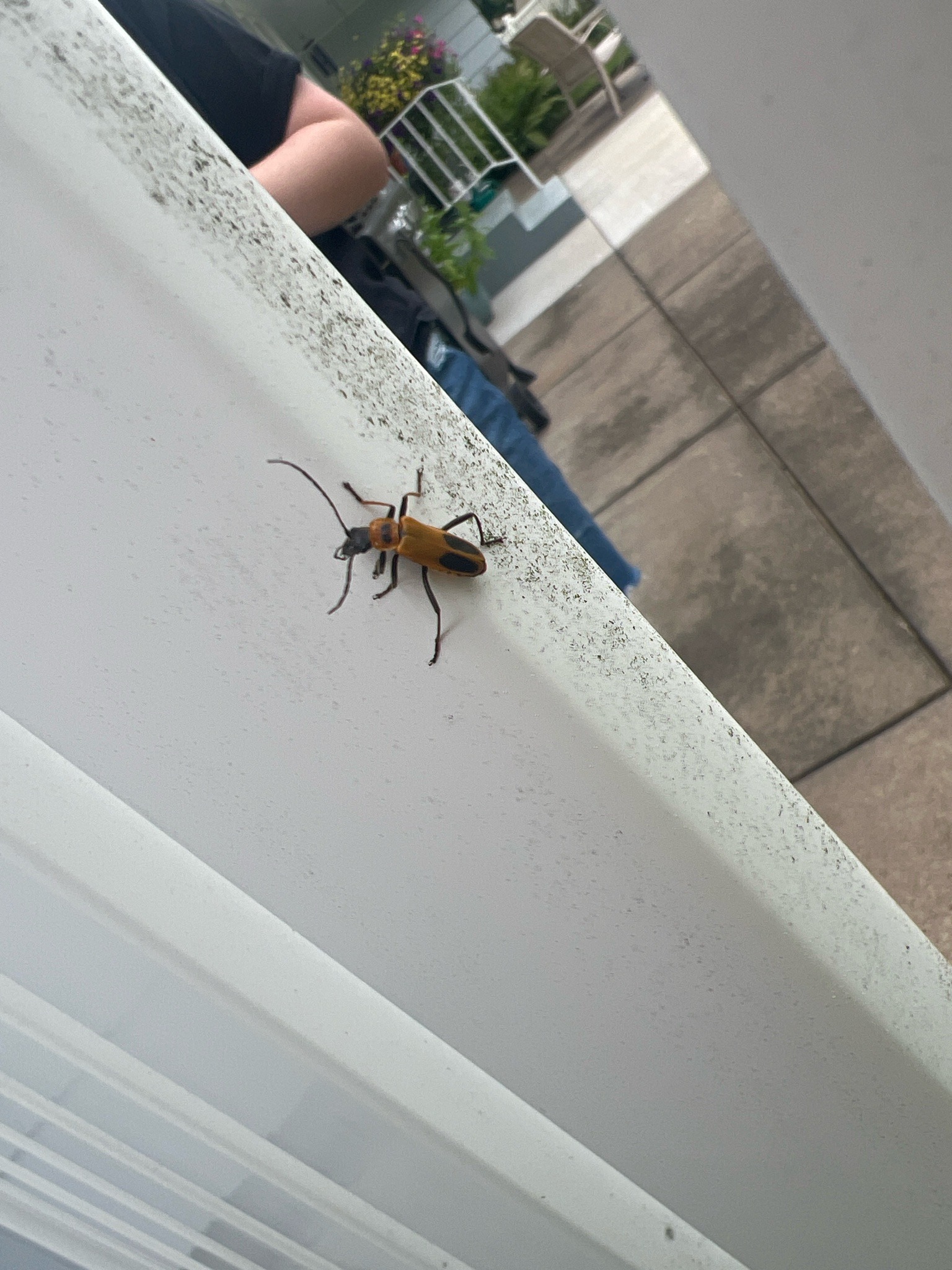
Elderberry Borer
Desmocerus palliatus
- Order & Family
- Coleoptera / Cerambycidae (Longhorn Beetles)
- Size
- 18 to 26 mm (approx. 0.7 to 1.0 inches)
Natural Habitat
Moist woodlands, stream banks, fields, and gardens near elderberry shrubs (Sambucus species) across eastern North America.
Diet & Feeding
Adults feed on elderberry foliage and flowers. Larvae bore into the roots and lower stems of living elderberry plants.
Behavior Patterns
Diurnal insects often observed resting or feeding directly on elderberry plants during late spring and early summer. The brightly colored, metallic blue-to-black and orange/yellow elytra serve as warning coloration (aposematism). Females lay eggs near the base of elderberry plants, where larvae develop underground.
Risks & Benefits
Harmless to humans as they do not bite or sting. They serve as minor pollinators as adults, but heavy larval infestations can occasionally weaken or kill individual elderberry shrubs.