
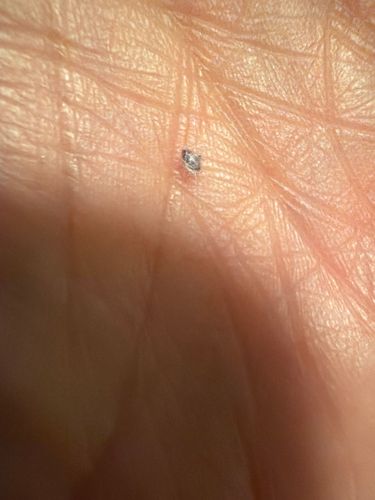
Lace Bug Nymph
Stephanitis spp. (likely)
- Order & Family
- Order Hemiptera, Family Tingidae
- Size
- 0.5 mm to 2 mm (nymph stage)
Natural Habitat
Found on the underside of leaves of various trees and shrubs, particularly azaleas, rhododendrons, and sycamores.
Diet & Feeding
Plant juices; they use piercing-sucking mouthparts to feed on the leaf sap from the underside of leaves, causing yellow or white stippling.
Behavior Patterns
They are semi-mobile in the nymph stage and often found in clusters alongside black spots of excrement (frass or 'tar spots'). They undergo incomplete metamorphosis with several molting stages before becoming winged adults.
Risks & Benefits
They do not carry diseases or bite humans routinely, though they may occasionally pierce skin with their mouthparts if they land on a person (causing minor, temporary irritation). They are considered landscape pests as heavy infestations can damage or kill ornamental plants.