
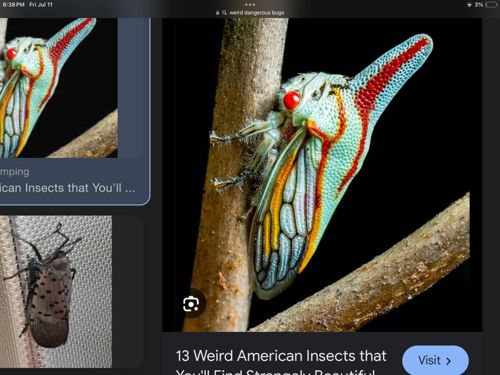
Peanut Bug, Lanternfly (specifically a species from the genus Fulgora, often F. laternaria or a closely related species)
Fulgora laternaria (or a closely related species within the genus Fulgora)
- Order & Family
- Order: Hemiptera, Family: Fulgoridae
- Size
- Generally large for an insect; body length can range from approximately 7 to 10 cm (2.8 to 4 inches), with a wingspan that can exceed 10-15 cm (4-6 inches).
Natural Habitat
Tropical and subtropical forests, particularly in Central and South America where its host plants are abundant. They are often found on the trunks and branches of trees.
Diet & Feeding
The Peanut Bug is herbivorous, feeding on the sap of various trees and plants. They use their piercing-sucking mouthparts to extract fluids from the phloem of their host plants.
Behavior Patterns
Planthoppers are typically found on the stems and leaves of plants, where they feed by piercing the plant tissue with their stylets and sucking out the sap. They are known for their jumping ability, which they use to escape predators. The elaborate 'hat' or protuberance on the head of some species, like the one pictured, is thought to serve as camouflage, mimicry (e.g., to resemble a leaf, a twig, or even a fungus), or even as a deterrent to predators. Their full life cycle usually involves several nymphal instars before reaching the adult stage.
Risks & Benefits
Generally, the Peanut Bug (Fulgora laternaria) is not considered a pest in its native habitat and is not harmful to humans. There are no direct risks to humans. Ecologically, they are a part of the forest ecosystem, contributing to the food web and plant-insect interactions. Their striking appearance makes them a species of interest for conservation and eco-tourism.