
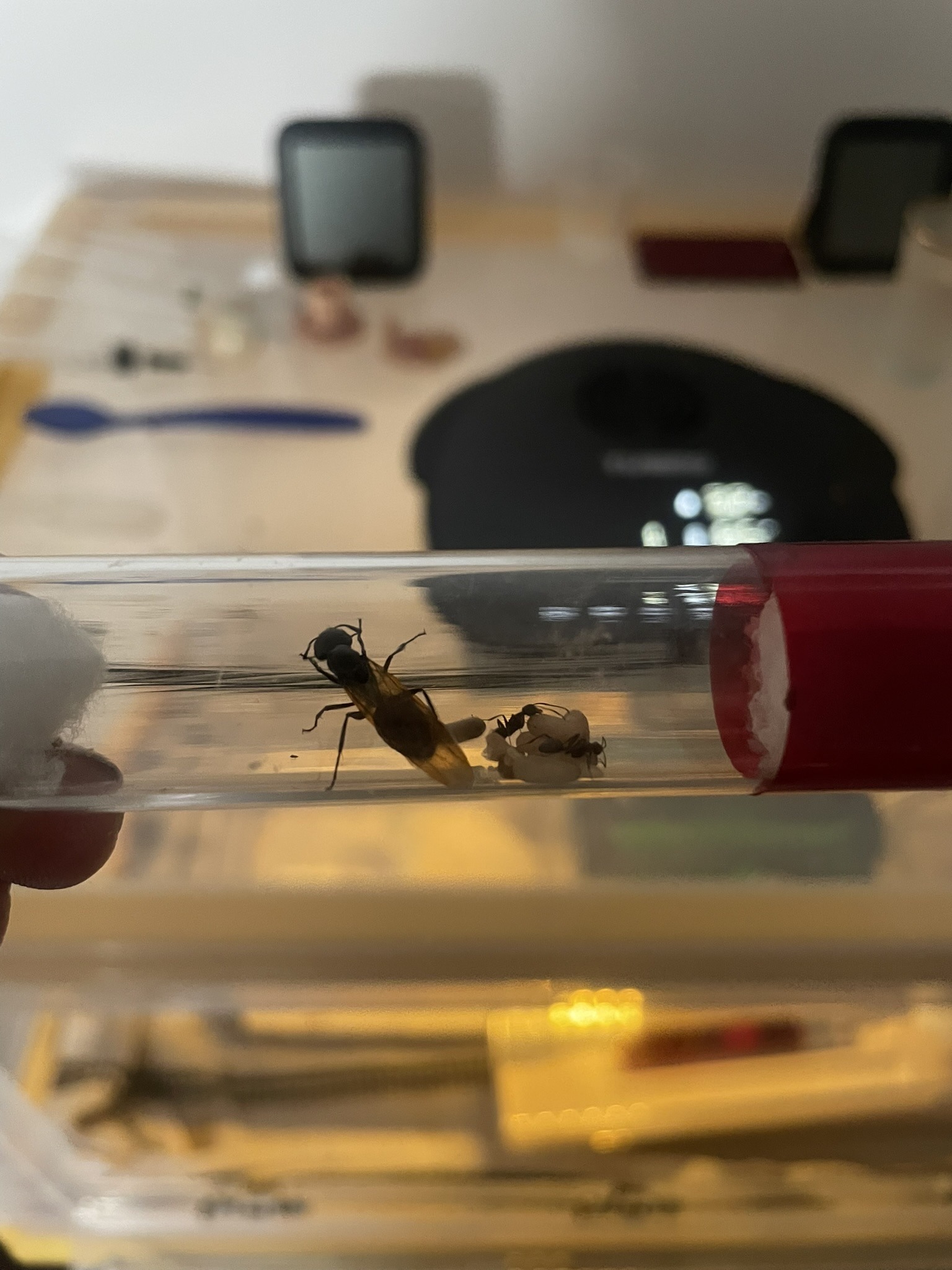
Community identification
Black Carpenter Ant (Queen with Workers)
Camponotus pennsylvanicus
- Order & Family
- Hymenoptera, Formicidae
- Size
- Queens range from 13 to 20 mm; Workers range from 6 to 13 mm.
Natural Habitat
Typically found in forested areas, nesting in dead wood, hollow logs, tree stumps, and sometimes in structural wood in buildings.
Diet & Feeding
Omnivorous; they consume plant juices, honeydew from aphids, other insects, and sugary or protein-rich food scraps found in human environments.
Behavior Patterns
They do not eat wood but excavate it to build nests. They are mostly nocturnal and exhibit a complex social structure with a founding queen, as seen in this test tube setup tending to her first brood (nanitics).
Risks & Benefits
Benefits include aerating soil and aiding in the decomposition of dead wood. Risks include potential structural damage to wooden buildings if a large colony establishes itself inside damp wood.