
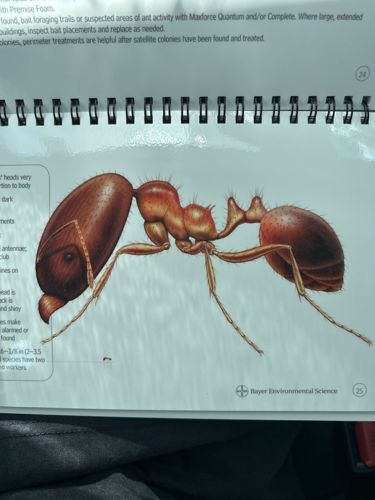
Carpenter Ant
Camponotus spp.
- Order & Family
- Order: Hymenoptera, Family: Formicidae
- Size
- Workers range from 6 to 13 mm (1/4 to 1/2 inch) in length; queens can be much larger, up to 20 mm (3/4 inch).
Natural Habitat
Carpenter ants primarily nest in wood, especially wood that is moist or decaying, but they can also infest sound wood. Nests can be found in trees, stumps, logs, and also in structural timbers of homes and other buildings (e.g., wall voids, insulation, around windows and doors, attics, and crawl spaces).
Diet & Feeding
Carpenter ants are omnivorous. They feed on a variety of foods including insect honeydew, plant and fruit juices, other insects (living or dead), and human food debris such as sweets, meats, and fatty foods.
Behavior Patterns
Carpenter ants are known for excavating wood to build nests, rather than eating it. They are active foragers, often traveling long distances from the nest in search of food. They are most active at night. Colonies can be quite large and may establish satellite nests.
Risks & Benefits
Risks: Carpenter ants can cause significant structural damage to homes and other wooden structures by excavating galleries for their nests. While they do not transmit diseases, their presence can be a nuisance. Benefits: In natural ecosystems, carpenter ants can aid in decomposition by breaking down dead wood. They also predate on other insects, helping to control insect populations.