
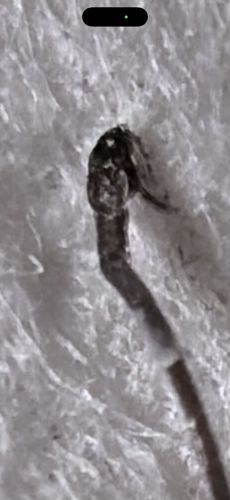
Community identification
Human Head Louse
Pediculus humanus capitis
- Order & Family
- Phthiraptera; Pediculidae
- Size
- 2.0 mm to 3.0 mm (roughly the size of a sesame seed)
Natural Habitat
The scalp and hair of human beings, specifically near the nape of the neck and around the ears.
Diet & Feeding
Obligate ectoparasite that feeds exclusively on human blood several times a day.
Behavior Patterns
They are wingless and cannot jump or fly; they move by crawling. Females lay eggs (nits) and glue them to the base of hair shafts near the scalp for warmth. They cannot survive for more than 24 to 48 hours away from a human host.
Risks & Benefits
Risks include intense itching (pruritus) caused by an allergic reaction to the louse's saliva, which can lead to secondary skin infections from scratching. They are not known to transmit diseases, but infestations can cause significant distress and social stigma. There are no ecological benefits.