
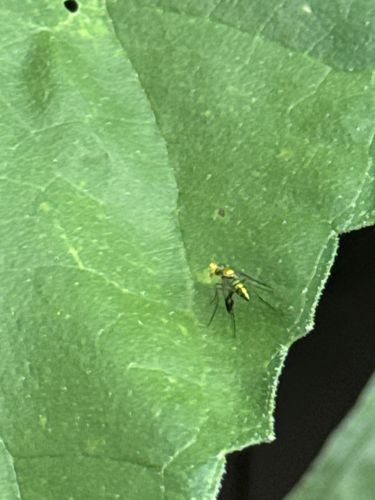
Long-legged fly
Dolichopodidae (family)
- Order & Family
- Order: Diptera, Family: Dolichopodidae
- Size
- Typically small to medium-sized, ranging from 1 mm to 9 mm in length.
Natural Habitat
They are commonly found in moist environments with abundant vegetation, including gardens, meadows, forests, marshes, and near bodies of water. They often perch on leaves or tree trunks in sunny areas.
Diet & Feeding
Adult long-legged flies are predatory, feeding on various small insects such as aphids, mites, and other soft-bodied invertebrates. Larvae can be predatory, herbivorous, or saprophagous depending on the species.
Behavior Patterns
Long-legged flies are active predators. Adults are often found on foliage or tree trunks, where they hunt for smaller insects. They are known for their distinctive mating rituals, which can involve complex aerial displays.
Risks & Benefits
Long-legged flies are beneficial insects in gardens and agricultural settings as they prey on various pest insects, helping to control their populations naturally. They pose no known risks to humans.