
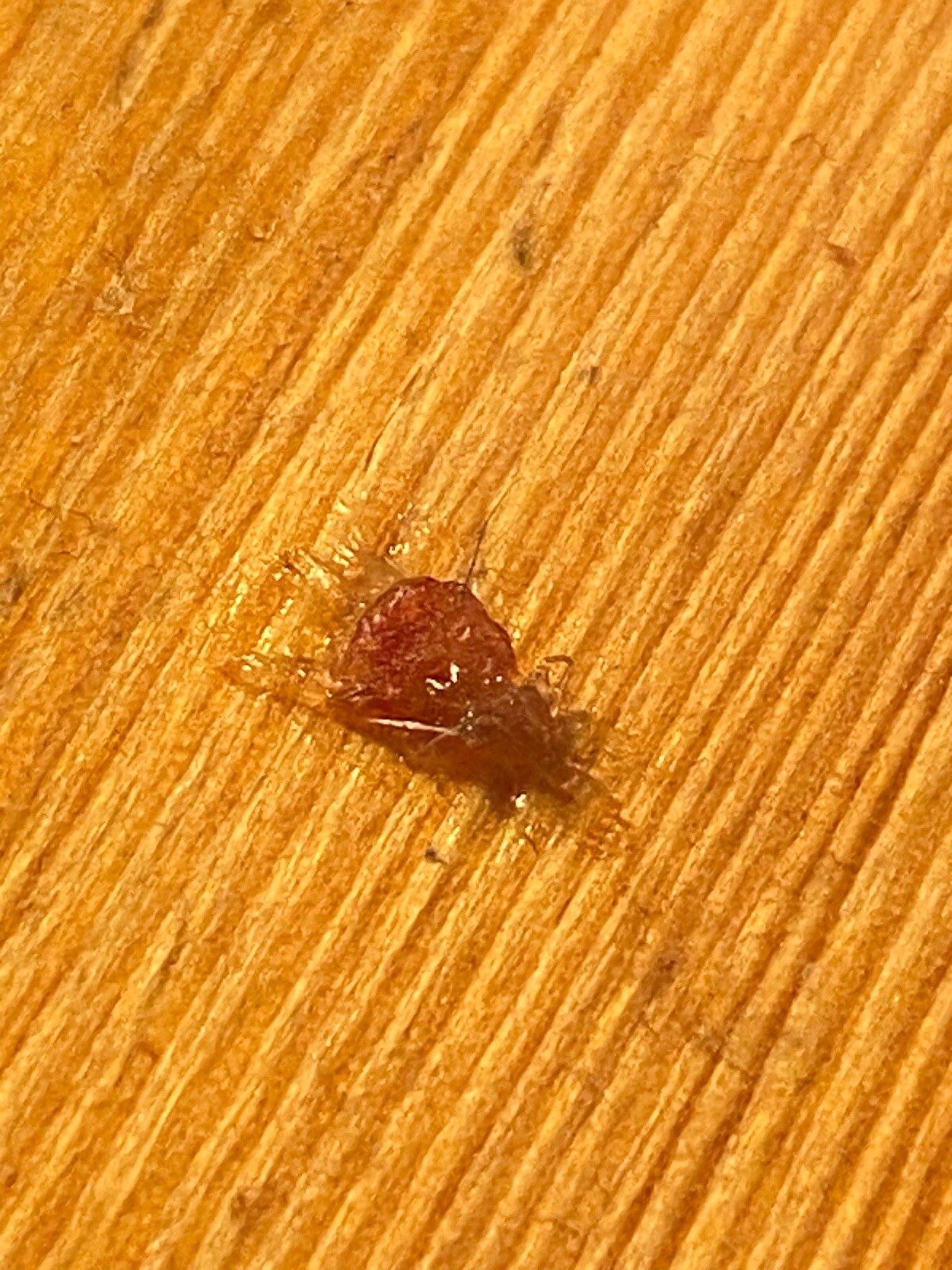
Bed bug
Cimex lectularius
- Order & Family
- Order: Hemiptera, Family: Cimicidae
- Size
- Approximately 4 to 5 mm in length for adults; smaller for nymphs.
Natural Habitat
Typically found in indoor environments, specifically in human dwellings, hiding in cracks, crevices, mattresses, and furniture near sleeping areas.
Diet & Feeding
Obligate hematophages, meaning they feed exclusively on the blood of warm-blooded animals, primarily humans and occasionally pets.
Behavior Patterns
Nocturnal insects that are most active at night; they find hosts using heat and carbon dioxide. They undergo incomplete metamorphosis (egg, nymph, adult). The specimen in the image appears to have been recently engorged or crushed, releasing blood.
Risks & Benefits
Risks include itchy bites, allergic reactions, secondary skin infections, and significant psychological distress/anxiety. They are not known to transmit diseases to humans. There are no ecological benefits to humans; they are considered significant pests.