
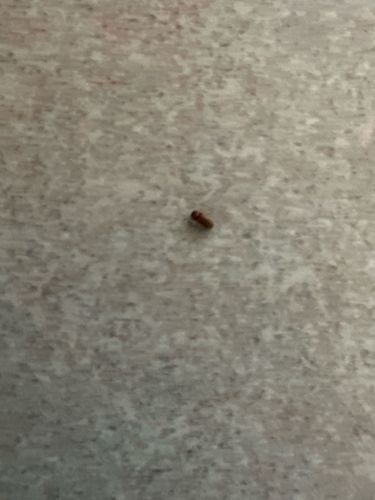
Wood borer (or possibly some type of beetle larva/pupa)
Too difficult to determine from the image, as many species fit the general appearance. Examples include Anobium punctatum (common furniture beetle) or Lyctus spp. (powderpost beetles).
- Order & Family
- Order: Coleoptera (beetles); Family: Anobiidae (death-watch beetles and furniture beetles) or Bostrichidae (false powderpost beetles) are strong possibilities, but identification to family without clearer features is difficult.
- Size
- Typically 2-7 mm for adults, but the object in the image appears to be a larva or pupa, which can range from a few millimeters to over a centimeter depending on the species and stage.
Natural Habitat
Indoors, associated with wooden structures, furniture, flooring, or wood products. Outdoors, in dead or dying trees and logs.
Diet & Feeding
The larvae of wood borers feed on wood, including hardwoods, softwoods, and processed wood products like furniture, flooring, and structural timbers. The adult beetles typically do not feed on wood, or feed very little, often consuming only nectar and pollen from flowers.
Behavior Patterns
They are typically slow-moving and are attracted to light. Females lay eggs in crevices. The larvae are the damaging stage, tunneling into wood or other food sources. Life cycles can vary depending on conditions.
Risks & Benefits
Risks: Can cause significant structural damage to homes and wooden objects, leading to costly repairs. Potential for allergic reactions to dust from frass (wood dust). Benefits: In natural ecosystems, some wood-boring beetles are important decomposers, breaking down dead wood and recycling nutrients.