
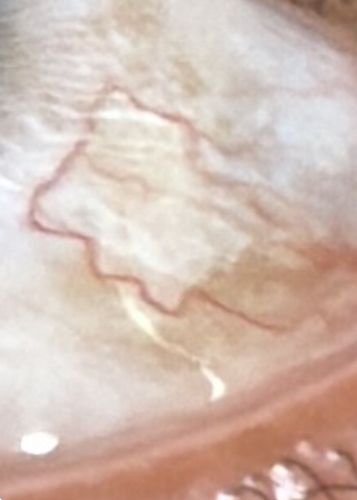
Community identification
Hookworm / Cutaneous Larva Migrans
Ancylostoma braziliense (most common)
- Order & Family
- Order: Strongylida, Family: Ancylostomatidae
- Size
- Adults 5-15 mm; larvae are microscopic
Natural Habitat
Warm, moist soil or sand contaminated with animal feces
Diet & Feeding
Nutrients from the host's skin tissue and blood
Behavior Patterns
The larvae penetrate the skin and migrate along the sub-epidermal layer, creating visible 'creeping' tracks as they move roughly a few millimeters a day.
Risks & Benefits
Can cause intense itching, inflammation, and secondary bacterial infections. They provide no ecosystem benefit to humans and represent a zoonotic parasitic infection.