
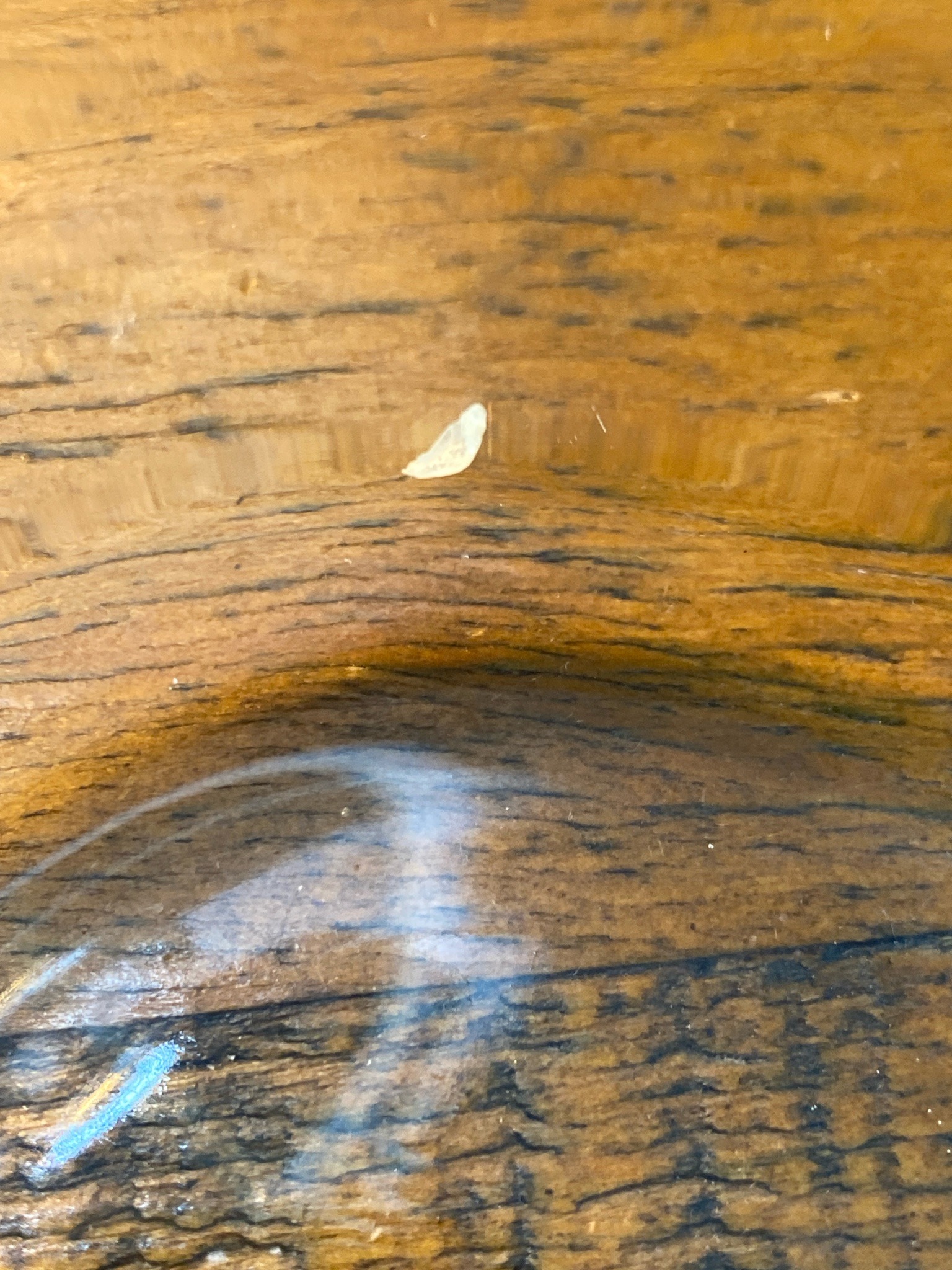
Community identification
Whitefly
Trialeurodes vaporariorum
- Order & Family
- Order Hemiptera; Family Aleyrodidae
- Size
- 1 to 2 mm in length
Natural Habitat
Gardens, greenhouses, and indoor houseplants; typically found on the undersides of leaves.
Diet & Feeding
Plant sap; they are phloem-feeders that use piercing-sucking mouthparts to consume cell sap.
Behavior Patterns
They congregate in large numbers on the undersides of leaves and fly up in a cloud when disturbed. They excrete 'honeydew' (a sugary liquid) and follow a multi-stage life cycle from egg to nymph to adult.
Risks & Benefits
Significant agricultural and horticultural pests. They weaken plants, cause leaf yellowing, and promote the growth of black sooty mold. They can also transmit various plant viruses. They have no direct health risk to humans but can devastate crops.