
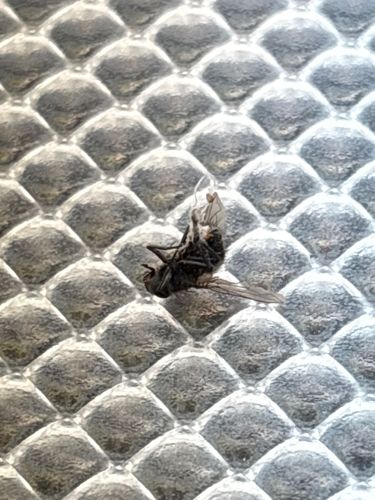
Community identification
House Fly
Musca domestica
- Order & Family
- Diptera: Muscidae
- Size
- 6–7 mm (0.24–0.28 in) in length
Natural Habitat
Found worldwide in close proximity to human activity, especially near animal waste, garbage, and decaying organic matter.
Diet & Feeding
Adults feed on liquids and semi-solid materials; they use saliva to liquefy solid food like sugar or food scraps. Larvae (maggots) feed on rotting organic material.
Behavior Patterns
Diurnal insects that are active during the day. They have a rapid life cycle (8-10 days in warm weather) and are known for their frequent landing and regurgitation behavior while feeding.
Risks & Benefits
Significant risks to human health as they act as vectors for over 100 pathogens, including typhoid, cholera, and salmonella. Beneficially, they act as decomposers in the environment and serve as a food source for many animals.