
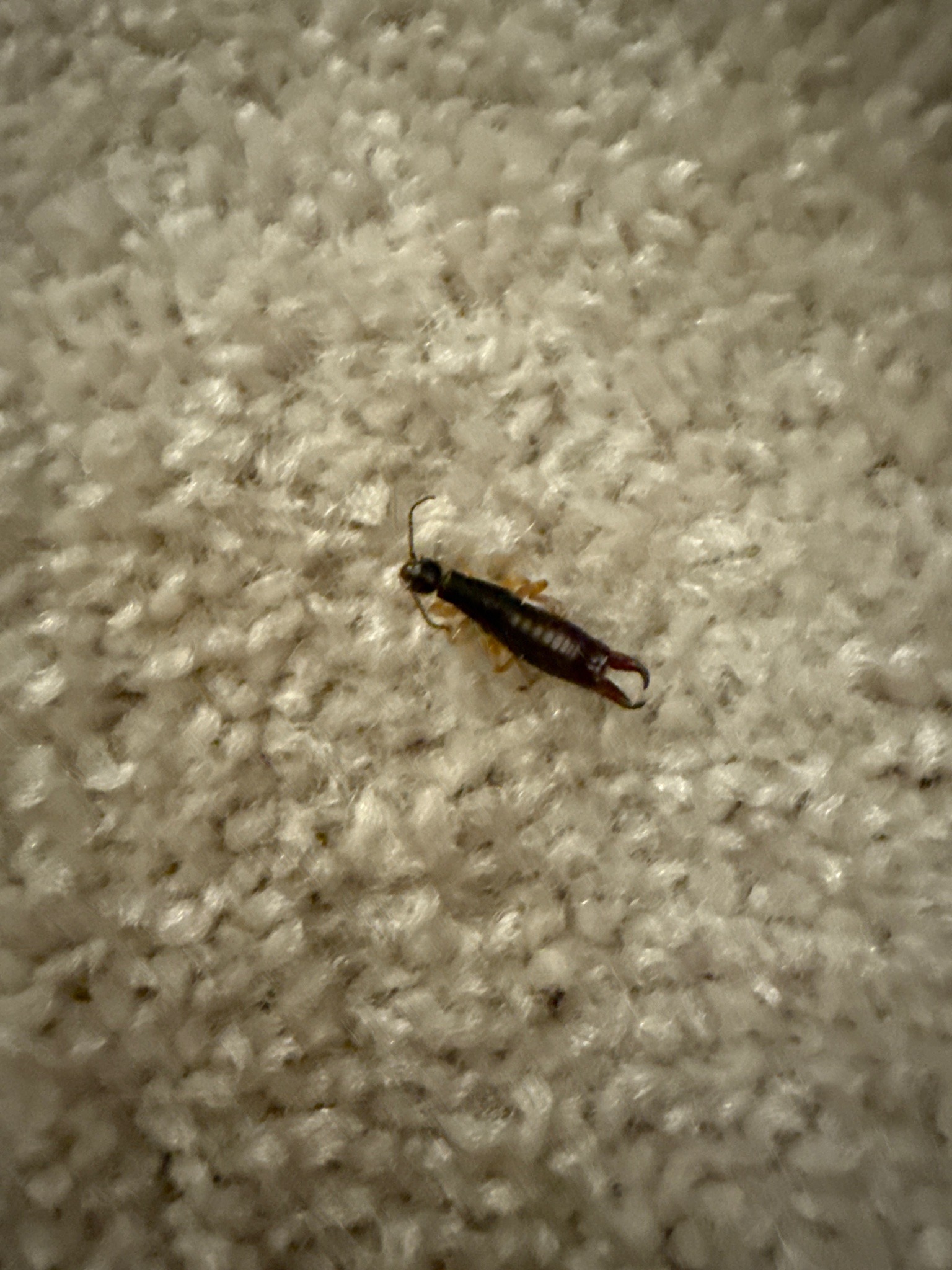
European Earwig
Forficula auricularia
- Order & Family
- Dermaptera: Forficulidae
- Size
- 12 to 15 mm (0.5 to 0.6 inches) in length
Natural Habitat
Moist, dark environments such as soil, under rocks, mulch, woodpiles, and occasionally damp indoor areas like basements or bathrooms.
Diet & Feeding
Omnivorous; feeds on a variety of matter including decaying organic debris, smaller insects, and garden plants like flowers, vegetables, and seedlings.
Behavior Patterns
Nocturnal insects that are active at night and hide in crevices during the day. They are known for their maternal care, where females guard eggs and young nymphs. They use their cerci (pincers) for defense and capturing prey.
Risks & Benefits
Generally harmless to humans; they can give a small pinch but are not venomous or disease-carriers. Benefits the ecosystem by breaking down organic matter and eating plant pests like aphids, though they can become minor horticultural pests themselves.