
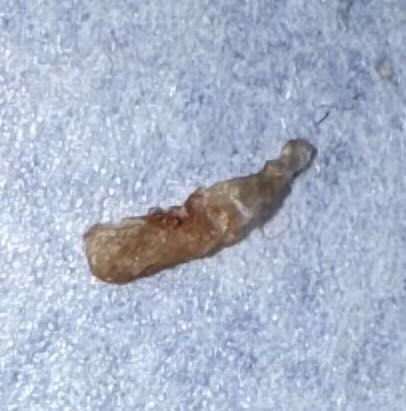
Case-bearing Clothes Moth (Larval Case)
Tinea pellionella
- Order & Family
- Order: Lepidoptera, Family: Tineidae
- Size
- Larval case is approximately 6–10 mm (1/4 to 3/8 inch) long.
Natural Habitat
Typically found indoors in dark, undisturbed areas such as closets, under furniture, in carpets, or storage boxes where natural fibers (wool, fur, silk) are present.
Diet & Feeding
The larvae feed on keratin-rich materials including wool, fur, silk, feathers, felt, leather, and sometimes accumulated dust or pet hair.
Behavior Patterns
The larva constructs a portable, flattened case out of silk and debris (sand, fibers) which it drags along with it as it moves. It can turn around inside the case to feed from either end. When ready to pupate, it seeks a crack or crevice and seals the case.
Risks & Benefits
Risks: Represents a significant pest to households and museums; larvae cause irreversible damage to clothing, carpets, tapestries, and taxidermy by chewing holes in them. Benefits: None in a domestic setting; in nature, they aid in the decomposition of animal remains (keratin).