
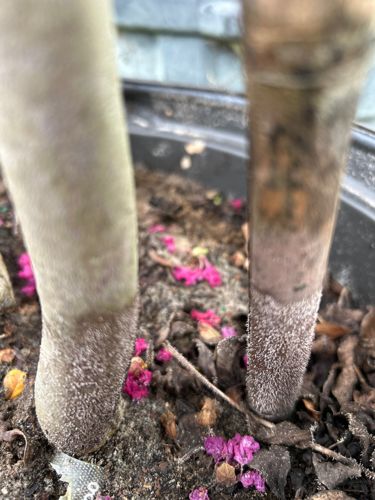
Spider Mite (specifically, the white speckling on the plant stems and the fine webbing indicated might be from Red Spider Mites or other Tetranychus species)
Tetranychus spp. (e.g., Tetranychus urticae for Two-spotted spider mite)
- Order & Family
- Order: Acari (mites belong to the class Arachnida, not Insecta, but are often referred to as 'bugs'), Family: Tetranychidae
- Size
- Typically very small, adults ranging from 0.4 to 0.6 mm in length. They are barely visible to the naked eye, often appearing as tiny moving dots.
Natural Habitat
They are commonly found on the underside of plant leaves, in gardens, greenhouses, and indoor plants. They prefer warm and dry environments.
Diet & Feeding
Spider mites are polyphagous, feeding on a wide variety of plants by piercing plant cells and sucking out the sap. This causes stippling (tiny white or yellow spots) on leaves, and if severe, can lead to bronzing, yellowing, and defoliation.
Behavior Patterns
Spider mites are known for spinning fine silk webs, especially when infestations are severe. They thrive in hot, dry conditions. They reproduce rapidly, leading to quick population explosions. Females can lay many eggs, which hatch in a few days.
Risks & Benefits
Risks: Significant agricultural and horticultural pests, causing damage to crops, ornamental plants, and trees by feeding, which can reduce yield and weaken or kill plants. Benefits: No direct benefits to humans or the ecosystem are typically attributed to spider mites due to their pest status.