
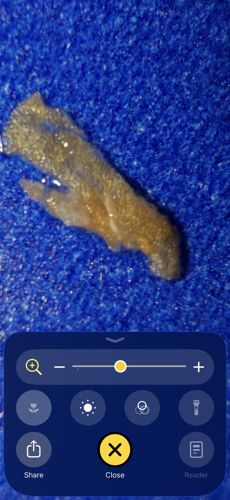
Community identification
Case-bearing clothes moth (Larva)
Tinea pellionella
- Order & Family
- Lepidoptera: Tineidae
- Size
- Larvae/cases are typically 6-10 mm in length.
Natural Habitat
Indoors within households, specifically inside closets, storage bins, and dark corners where natural fibers are present.
Diet & Feeding
Keratin-rich materials including wool, fur, feathers, hair, silk, and upholstered furniture.
Behavior Patterns
The larva constructs a portable silken case incorporating debris and fibers from its food source. It carries this case as it moves and feeds, eventually pupating within it.
Risks & Benefits
Risk: Significant pest of textiles, causing irregular holes in clothing and carpets. Benefit: In nature, they help break down organic debris like bird nests and animal remains; no direct health risk to humans.