
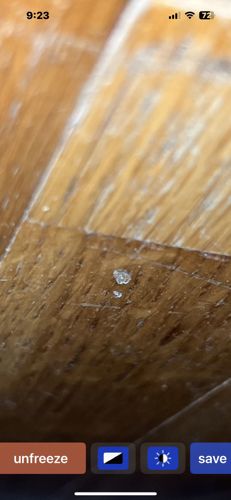
Scale Insect
Coccoidea (superfamily)
- Order & Family
- Hemiptera, various families within Coccoidea (e.g., Diaspididae, Pseudococcidae)
- Size
- Varies by species, but generally 1-10 mm in length. The specimen in the image appears to be very small, likely in the lower end of this range (1-3mm).
Natural Habitat
Typically found on plants, both indoors and outdoors, attaching to stems, leaves, and fruit. They are often found on deciduous and evergreen trees, shrubs, and houseplants.
Diet & Feeding
Plant sap. Scale insects are phytophagous, meaning they feed on the sap of plants using their piercing-sucking mouthparts.
Behavior Patterns
Once a scale insect finds a suitable feeding spot, it typically settles and remains stationary for the rest of its life, covering itself with a protective waxy or cottony coating. They are often difficult to spot due to their small size and cryptic appearance. Many species reproduce parthenogenetically (without mating).
Risks & Benefits
Risks: Scale insects are considered significant plant pests. They can weaken plants by sucking their sap, leading to stunted growth, yellowing leaves, defoliation, and even plant death in severe infestations. Some species also excrete honeydew, a sticky substance that promotes the growth of sooty mold, further hindering photosynthesis. Benefits: In certain ecosystems, some species may serve as a food source for natural predators, and a few scale insect species are used in biological control programs or for producing dyes (e.g., cochineal).