
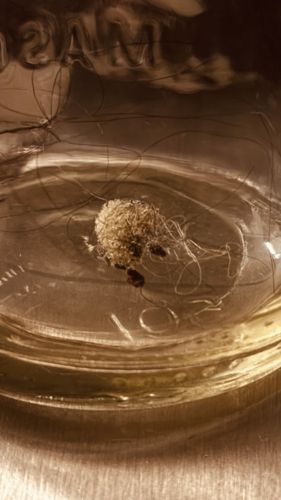
Carpet Beetle larvae in a 'case'
Anthrenus scrophulariae (likely, though difficult to confirm species from image alone)
- Order & Family
- Coleoptera, Dermestidae
- Size
- 2-5 mm (larvae)
Natural Habitat
Indoors, especially in areas with textile products, dust, and organic debris (carpets, clothing, upholstered furniture, attics, museums, pantries)
Diet & Feeding
Keratin-based materials (wool, silk, fur, feathers), dried animal products, stored dry foods, lint, and dust.
Behavior Patterns
Larvae are scavengers and consume organic matter. They often roll into a ball or remain still when disturbed. They are known for their slow movement and a preference for dark, undisturbed areas. The cocoon-like structure seen in the image is often formed from shed larval skins and debris, providing camouflage and protection during pupation or as a larval resting place. Their lifecycle includes egg, several larval instars, pupa, and adult stages. Adults are typically winged and feed on pollen and nectar outdoors.
Risks & Benefits
Risks: Considered a common household pest, carpet beetle larvae can cause significant damage to textiles, clothing, carpets, upholstered furniture, and stored food products containing animal derivatives. They can also exacerbate allergies in sensitive individuals due to shed larval skins and frass. Benefits: In natural environments, they play a role in decomposition by consuming dead organic matter. However, their presence indoors is generally undesirable.