
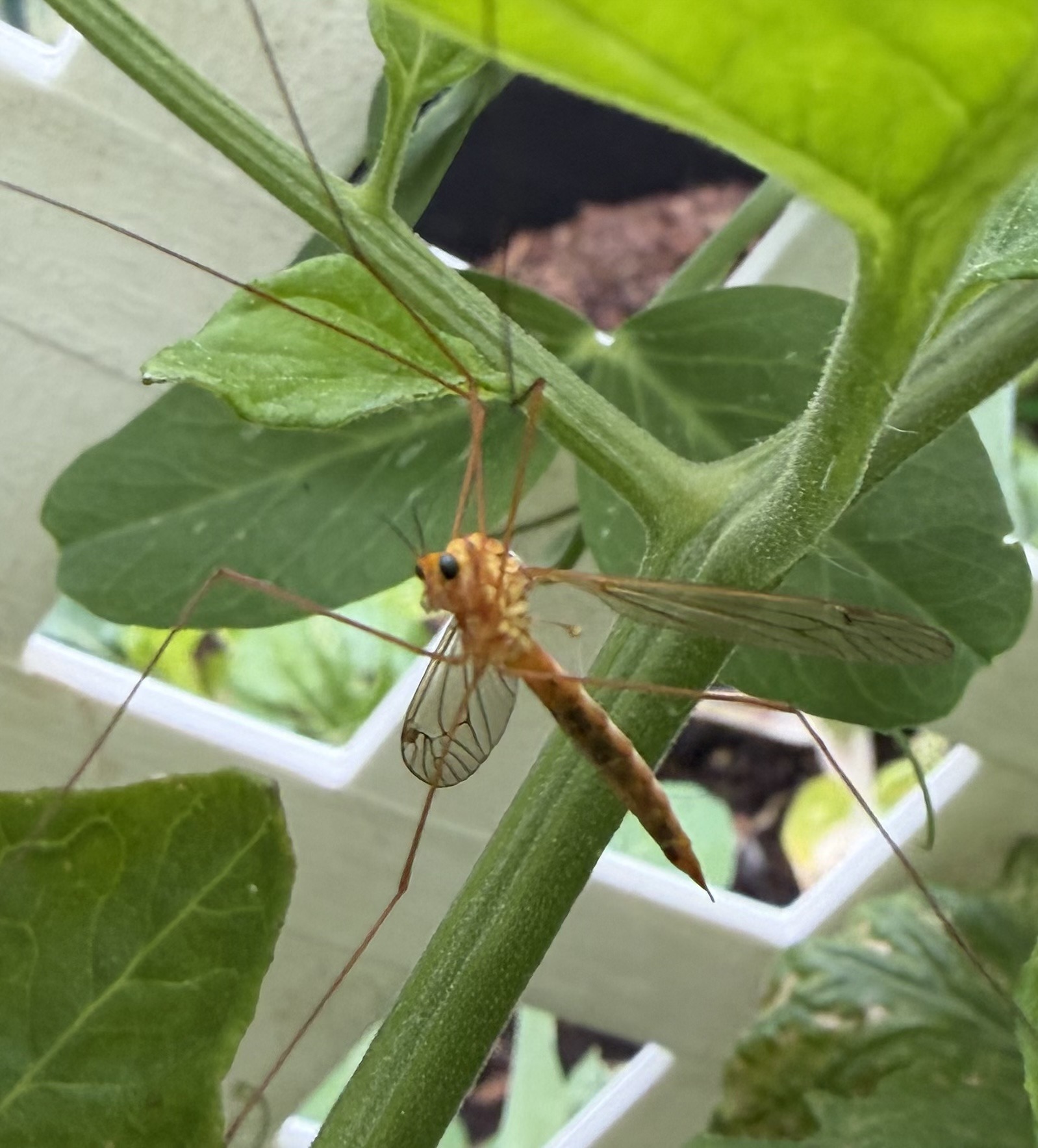
Community identification
Crane Fly
Tipulidae (Family)
- Order & Family
- Order: Diptera, Family: Tipulidae
- Size
- 10 to 65 mm (0.4 to 2.5 inches) wingspan
Natural Habitat
Damp environments, including woodlands, meadows, and gardens near water sources.
Diet & Feeding
Adults often do not eat or drink only nectar; larvae (leatherjackets) eat decaying organic matter, plant roots, and fungi.
Behavior Patterns
Weak flyers often mistaken for giant mosquitoes; they undergo complete metamorphosis and are most active in late summer and autumn.
Risks & Benefits
Harmless to humans as they do not bite or sting; beneficial as a food source for birds and bats, though larvae can damage turf grass.